Sources of Curiosity
Questions from October 21 walk
How is amber created?
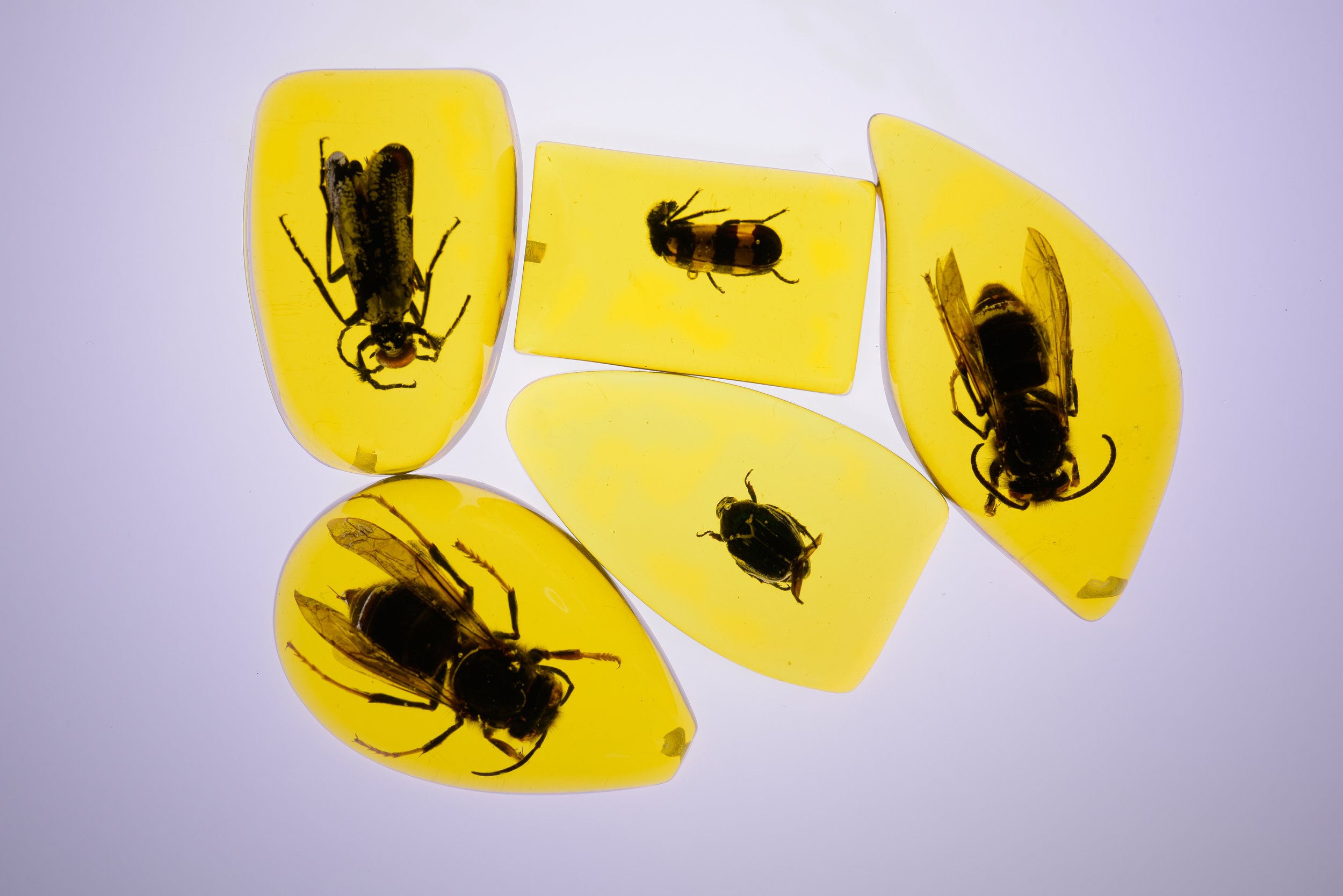
The creation of amber takes millions of years. It starts when a coniferous tree exudes resin, usually in response to some wound. Occasionally, insects and other plants can become trapped in the sticky resin as it hardens. The hardened resin becomes buried in sediment under the forest floor and eventually becomes part of sedimentary rock, subject to enormous temperature and pressure.
As the sedimentary rocks erode, amber can be found along river banks and other erosion features. Insects and plants in these amber deposits may be millions of years old.
There are no known amber deposits in Maine, but it is possible that spruce and pine trees may be creating amber deposits that could be discovered millions of years from now.
What is a bog?
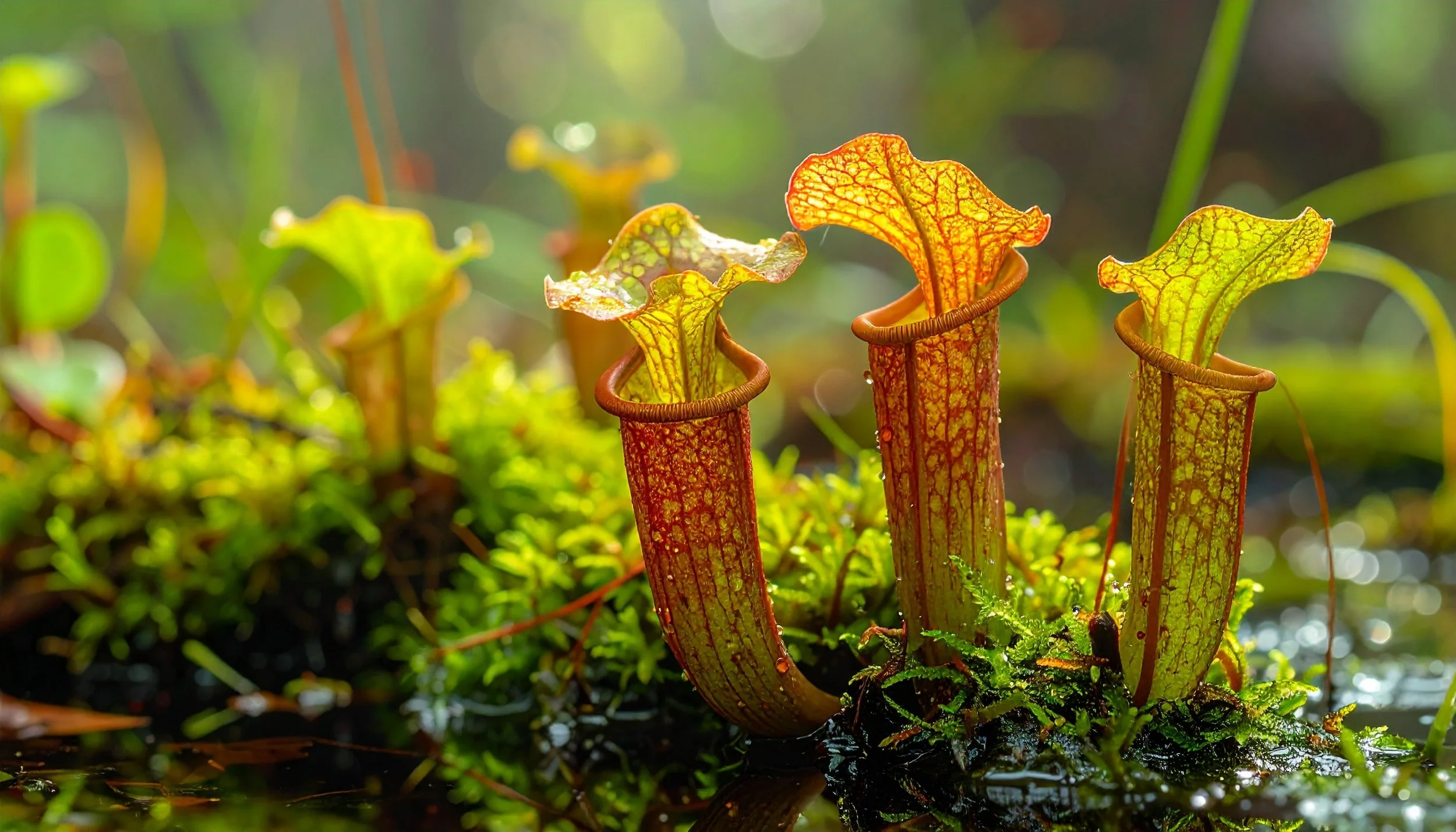
A bog is a wetland that is made up of heavy, wet soils, mosses, and plants that grow well in very acidic environments. Many plants and insects grow only in bog environments. Maine bogs host two carnivorous plants, the sundew and the pitcher plant. One of the most important bog plants is the sphagnum moss, which we see on the forest floor in the woods behind the school.
For more information about bog ecosystems, see these sources: