Sources of Curiosity
Questions from April 14 walk
What do you do when you flip your kayak?
If your kayak flips, the most important thing is to stay calm, stay with your boat, and use a simple move to flip it back over. Kids your age can learn this safely by practicing in warm, shallow water with an adult nearby.
🌊 What To Do First
When you fall in, it can feel surprising—but even expert paddlers flip sometimes. The trick is knowing what to do next.
1. Take a breath and grab your paddle. Your paddle helps you control the kayak once it’s upright again. Try to keep it with you.
2. Stay with your kayak. Your boat floats better than you do, even upside‑down. Hold onto it so it doesn’t drift away.
🔄 How To Flip the Kayak Back Over
Here’s the kid‑friendly version of what guides teach:
Move to the side of your kayak, near the middle.
Reach across and grab the far edge (the side underwater).
Pull that far edge toward you while pushing the near edge away.
The kayak will roll upright like a big floating log.
This works for both sit‑on‑top and sit‑inside kayaks, though sit‑on‑tops are easier.
🧗 How To Climb Back In
Once your kayak is upright:
Line yourself up with the seat area.
Kick your legs like you’re climbing out of a swimming pool.
As you kick, push down on the kayak and slide your belly onto the top.
Stay low so you don’t tip it again.
Turn your body and sit back in the seat.
🏖️ Practice Makes It Easy
Every expert agrees: you learn this best by practicing in calm, shallow water with an adult watching. It feels weird the first time, but after a few tries, it becomes fun—almost like a water challenge.
🎥 Helpful Videos & Images
Video: How to Right a Flipped Kayak https://www.youtube.com/watch?v=JkYq8N0uG7E (youtube.com in Bing)
Video: Sit‑On‑Top Kayak Re‑Entry Demo https://www.youtube.com/watch?v=8u7U2N2YtUo (youtube.com in Bing)
Photo Guide: Step‑by‑Step Capsize Recovery https://paddlingspace.com/how-to-right-a-kayak/ (paddlingspace.com in Bing)
(You can embed these in Squarespace by using Insert → Video or Insert → Link.)
What is the history of the kayak?
Kayaks were invented thousands of years ago by Indigenous Arctic peoples who needed fast, quiet boats for hunting on icy oceans. Their design was so smart that modern kayaks still follow the same basic idea today.
❄️ Where Kayaks Came From
Kayaks were first created by the Inuit, Yup’ik, and Aleut peoples who lived in the Arctic. These communities needed boats that were:
Lightweight
Fast and easy to steer
Warm and protected from freezing water
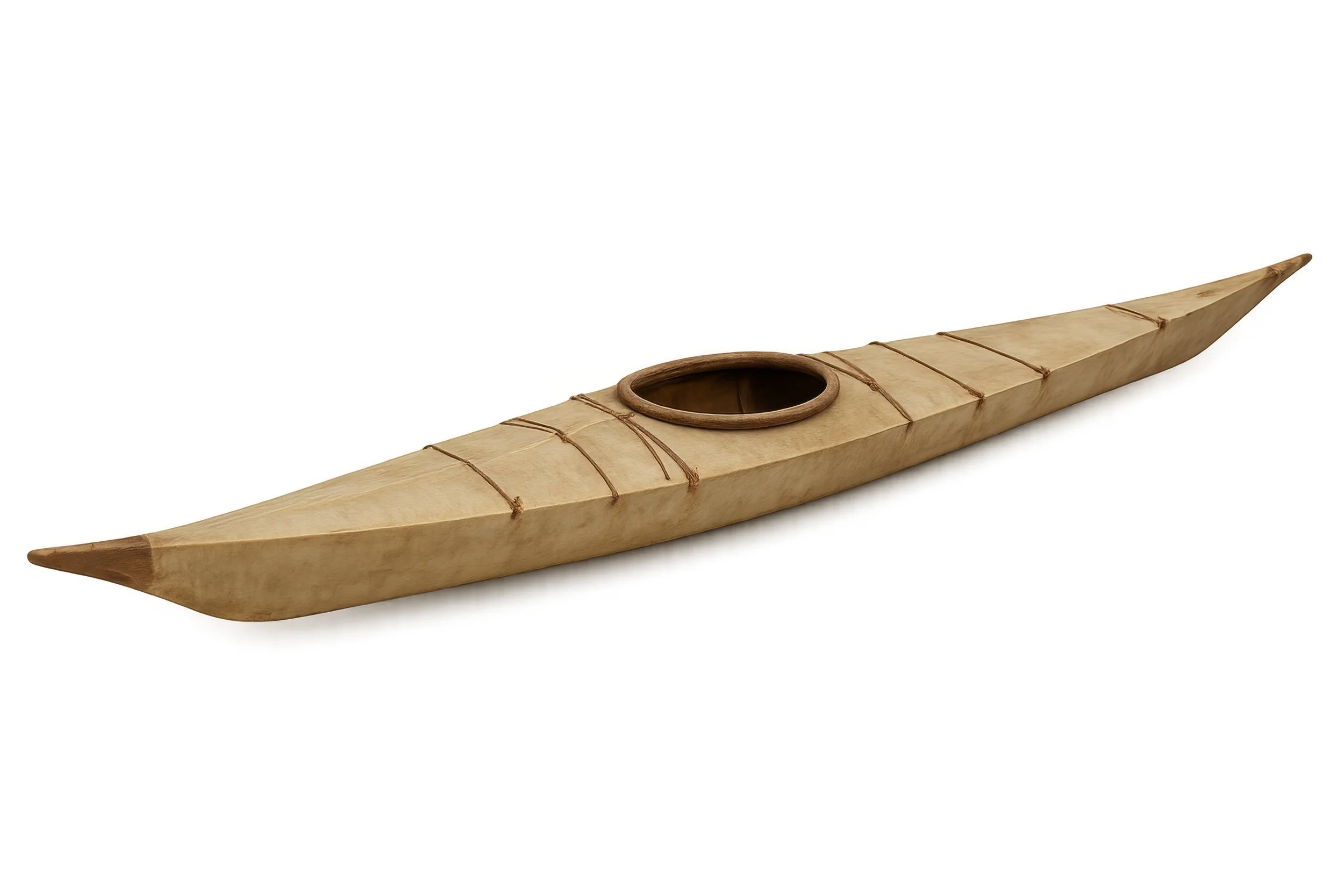
They built the first kayaks (called qajaq) using driftwood or whalebone frames covered with sealskin, sealed with whale fat to keep water out.
These early kayaks were so well‑designed that paddlers could even roll themselves upright if they flipped — a skill still used in kayaking today.
🌍 How Kayaks Spread Around the World
For thousands of years, kayaks stayed mostly in the Arctic. Then, in the 1800s, European explorers began studying and sketching them. One explorer, John MacGregor, built his own version called the Rob Roy and paddled it across Europe and the Middle East. His adventures made kayaking popular far beyond the Arctic.
By the 1920s and 1930s, inventors in Germany created folding kayaks with wooden frames and fabric skins. These were easy to carry and became popular for travel and exploration.
🚣 How Kayaks Changed Over Time
As kayaking spread, people experimented with new materials:
Wood‑and‑canvas kayaks (1800s)
Folding kayaks (1920s)
Aluminum kayaks (mid‑1900s)
Plastic and fiberglass kayaks (1970s–1980s)
Sit‑on‑top kayaks (1970s), which are great for beginners
Today, kayaks come in many types: whitewater, sea kayaks, recreational kayaks, and even pedal‑powered ones. But the basic idea — a narrow boat you move with a double‑bladed paddle — hasn’t changed much from the original qajaq.
What is the history of the canoe?
Canoes are one of the oldest boats humans ever invented—some are almost 10,000 years old! People all over the world created their own versions, using whatever materials they had around them. Even though canoes look simple, they helped humans explore, trade, hunt, and travel long before cars or trains existed.
🌍 The Oldest Canoe Ever Found
Archaeologists in the Netherlands discovered the Pesse canoe, a hollowed‑out tree trunk that is about 10,000 years old. That makes it the oldest known boat in the world. It was carved from a single log using stone tools.
Scientists have also found ancient canoes in places like Nigeria, China, and even underwater near Rome, where some were used for towing goods and animals along early trade routes.
🌲 Indigenous Canoes of North America
Indigenous peoples across North America designed canoes perfectly suited to their environments:
Birchbark canoes (Northeast): Lightweight, waterproof, and fast. Made by stretching birch bark over a wooden frame.
Dugout canoes (South & West): Carved from giant logs like cedar or cypress using fire and tools.
Skin‑on‑frame canoes (Arctic): Made by stretching sealskin over driftwood or whalebone frames—these are ancestors of the kayak.
These designs were so good that European explorers and fur traders quickly adopted them for traveling long distances on rivers and lakes.
🌊 Canoes Around the World
Canoes weren’t just a North American invention. Many cultures created their own styles:
Polynesian voyaging canoes used sails and outriggers to cross entire oceans.
European dugouts were used for fishing and river travel.
Caribbean peoples used canoas—this is where the English word canoe comes from.
🛠️ How Canoes Changed Over Time
For thousands of years, canoes were made from natural materials like bark, logs, and animal skins. Later, builders experimented with:
Wood‑and‑canvas canoes (1800s)
Aluminum canoes (mid‑1900s)
Fiberglass, Kevlar, and plastic canoes (modern day)
Today, canoes are used for racing, camping, whitewater adventures, and just relaxing on a lake. But the basic idea—lightweight, human‑powered travel—has stayed the same.