Sources of Curiosity
Questions from February 24 walk
Why does ice form more in river mouths than in the open ocean?
There are several reasons why ice forms more quickly in the mouths of rivers than in the open ocean:
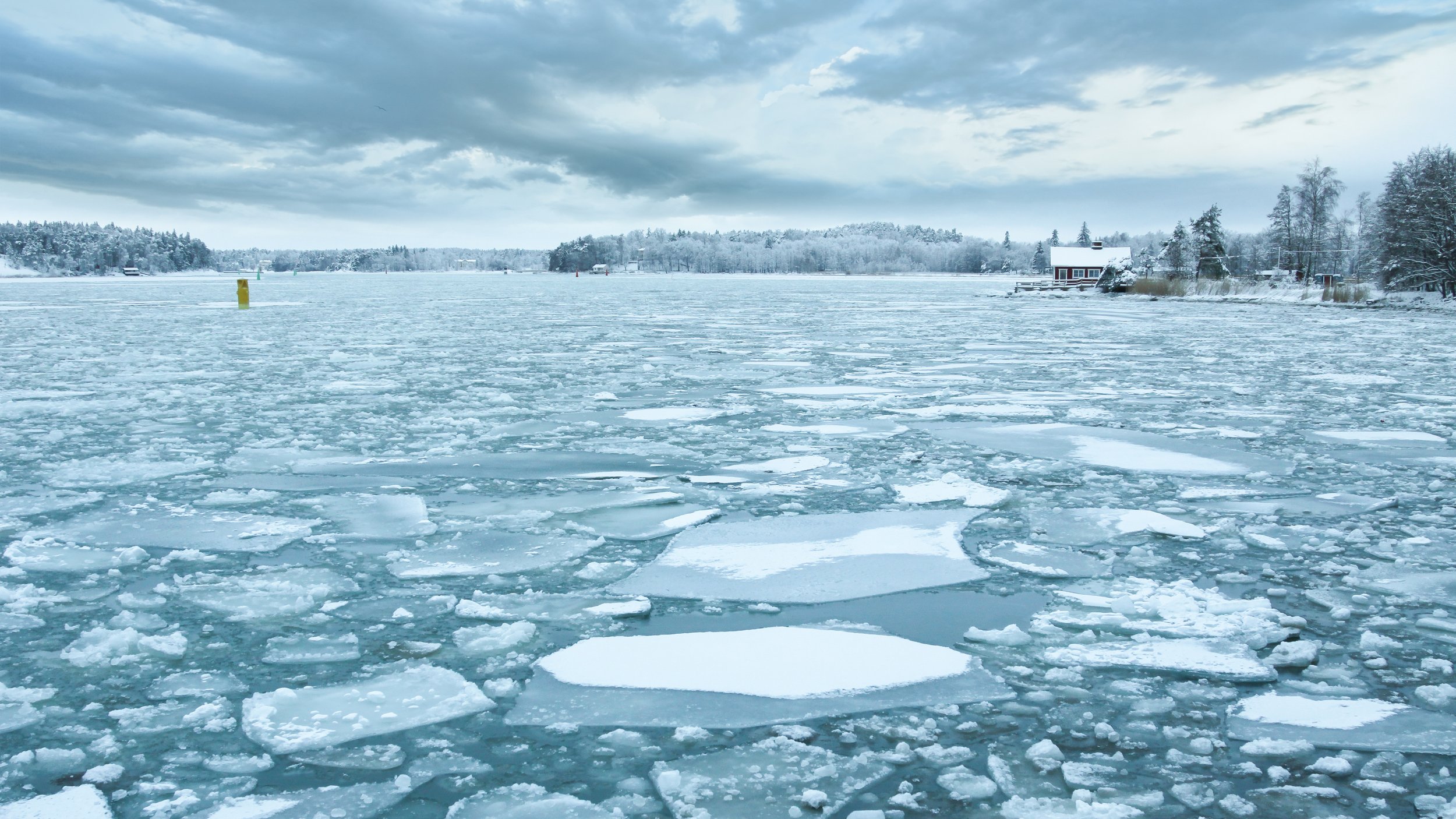
Salinity - fresh water freezes at 32 degrees, and salt water freezes at about 28 degrees Fahrenheit. Furthermore, fresh water is less dense than salt water and “floats” on top of the salt water. Therefore, in places where there is a source of a lot of fresh water like the mouth of the St. George River in Thomaston or Ripley Creek in Tenants Harbor, ice tends to form at the mouth of the river or stream first.
Wave action - when water is moving, it is much more difficult for it to freeze. Water in the open ocean is constantly moving and therefore freezes much more slowly.
Thermal mass - deep areas of salt water hold a lot more heat than a shallow river so it takes longer periods of very cold weather to get ocean water down to the freezing point.
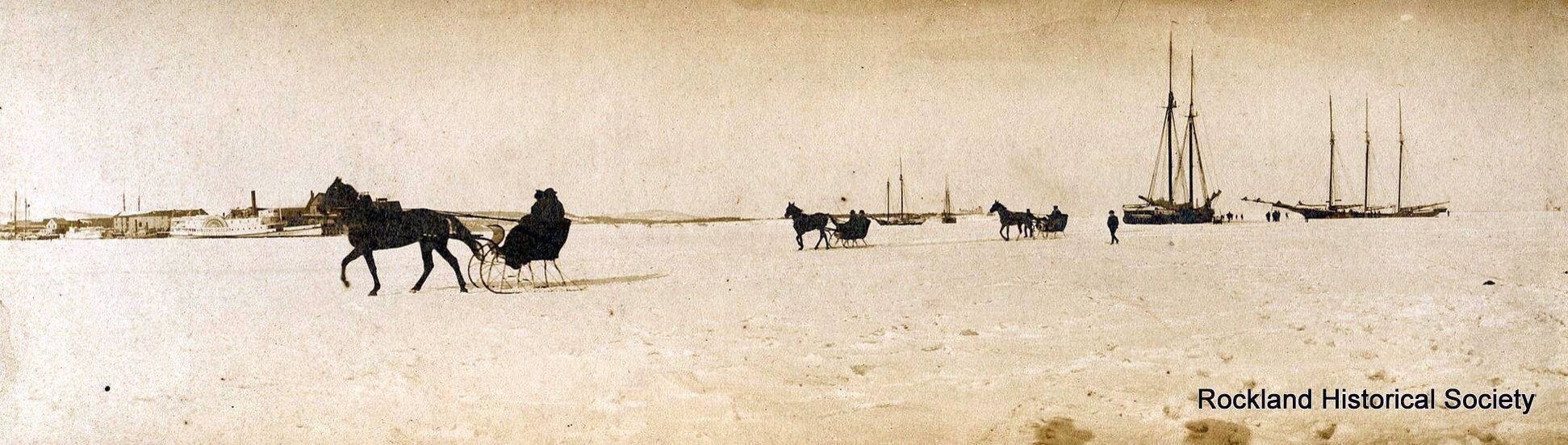
All that said, sometimes we do get long stretches of very cold weather. In the winter of 1904, Penobscot Bay froze over from Rockland to Vinalhaven to a depth of 14” which allowed people to travel back and forth over the ice with horses and sleighs.

What was the first fire truck?
Mankind has been trying to control fire ever since we became a species. When civilized cities first arose, fire became a potentially devastating and destructive problem, and citizens began to organize into firefighting groups. In Roman times, fires were often fought with bucket brigades, and that technology carried on to industrial revolution.
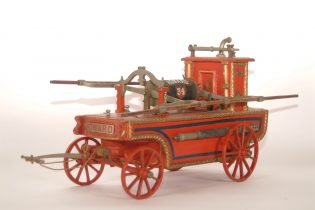
With the advent of machinery, it became possible to build large man-powered pumps and hoses. The first fire pumps were pulled through the streets by men and the pumps were powered by men on either side of the pump (see photo).
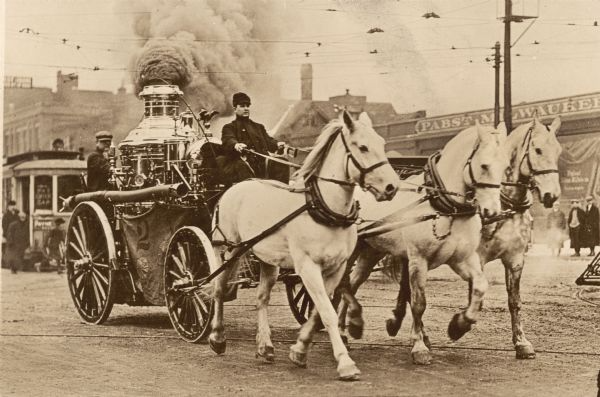
Eventually horses were employed to pull the pumps and with the invention of the steam engine and then the internal combustion engion, the modern fire truck eventually evolved.