Wild Brook Trout
The Jewel of Cold Water: Wild Brook Trout of the St. George
Georges River Land Trust — Living River Species Series
A Fish Worth Protecting
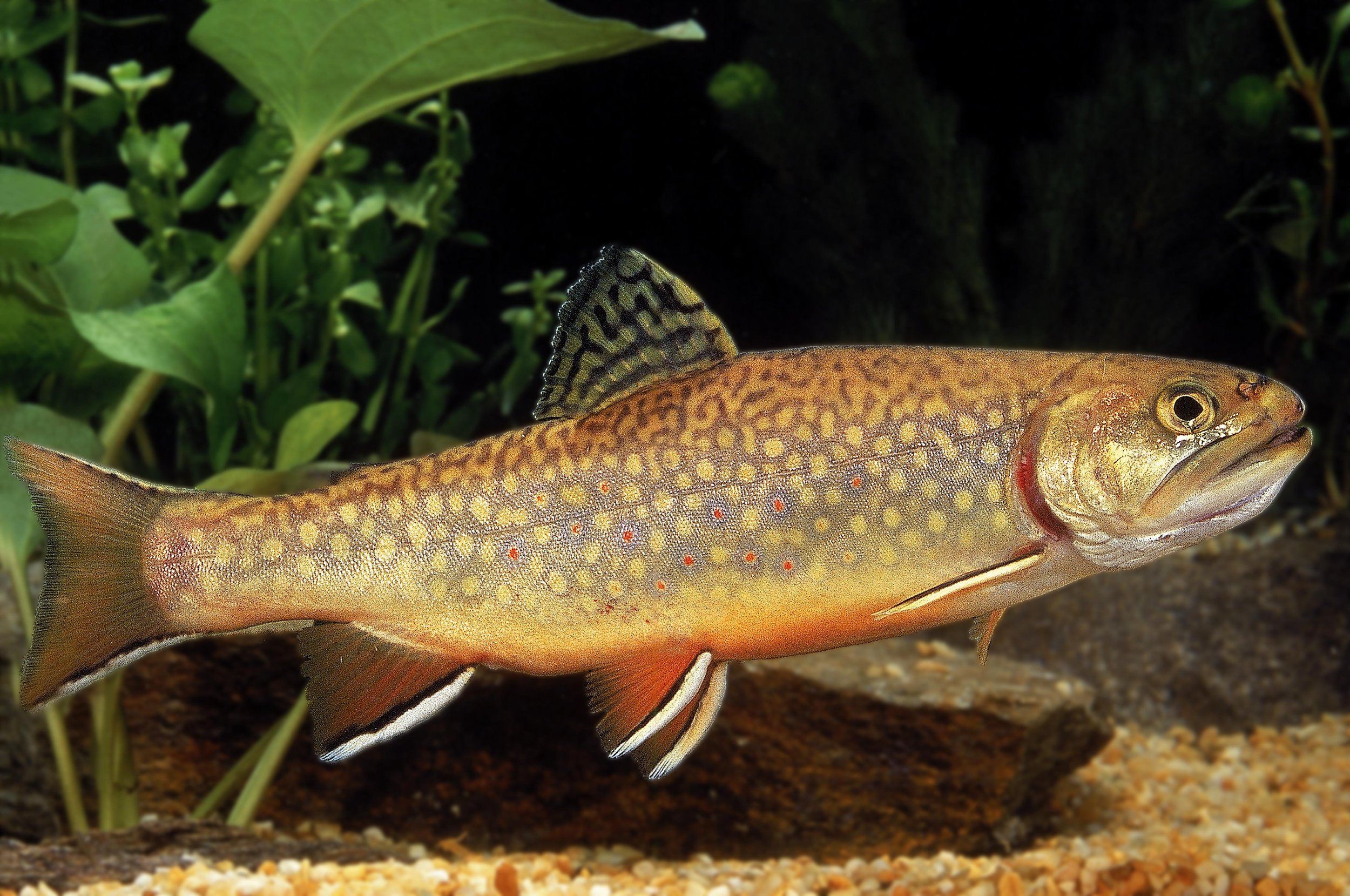
If you've ever seen a wild brook trout fresh from a cold stream — that mosaic of gold and green on the back, red spots haloed in blue, the belly burning orange at spawning time — you understand immediately why people have been devoted to this fish for generations. The brook trout is arguably the most beautiful freshwater fish in North America, and the St. George watershed is home to wild populations that have persisted here for thousands of years.
Their presence tells us something important: where wild brook trout thrive, the water is clean, cold, and healthy. Where they disappear, something has gone wrong.
Natural History: A Char by Any Other Name
Despite the name, the brook trout (Salvelinus fontinalis) isn't actually a trout — it's a char, more closely related to Arctic char and lake trout than to brown or rainbow trout. Chars are cold-water specialists, and brook trout demand exceptionally clean, well-oxygenated water that rarely exceeds 68°F. They are unforgiving indicators of water quality.
Brook trout are relatively small and short-lived — most wild fish reach 6–12 inches and rarely survive beyond five years. They feed on aquatic and terrestrial insects, worms, small fish, and crayfish, making them important predators in the stream food web.
The highlight of the brook trout's year comes in fall. As water temperatures drop, males transform dramatically — their flanks flushing scarlet red, royal blue, and brilliant orange. Females excavate a shallow depression in clean gravel called a redd, where eggs and milt are released together, then overwinter until hatching in late winter or early spring.
Identification Tips
Look for a slender body patterned with dark, worm-like markings (vermiculations) across the back and dorsal fin — a pattern no other Maine stream fish shares. Red spots haloed in blue dot the flanks, and the leading edge of each lower fin is white, backed by a thin black stripe — the single most reliable field mark for telling a brook trout from any other trout in the watershed. The tail is only slightly forked, almost square-cut, unlike the deeply forked tail of a landlocked salmon. Spawning males in fall flush brilliant orange-red along the belly and lower flanks. Find a small stream fish with these markings holding in cold, clear water, and you've found a brook trout.
Role in the St. George River Watershed
The main stem of the St. George River runs too warm in summer to support resident trout — temperatures and dissolved oxygen levels fall outside the brook trout's tolerance for much of the year. But the cold, shaded tributary streams that feed the river are a different story. Many harbor wild brook trout populations, and protecting these tributaries — through forested riparian buffers, reduced runoff, and careful land stewardship — is essential to keeping them there.
Maine holds the most extensive distribution of wild brook trout in the entire native range of the species in the United States, with fish occurring in an estimated 22,000 miles of stream habitat. That's a genuine point of state pride — and a responsibility.
Wild Fish vs. Stocked Fish
Maine IFW operates hatcheries that stock brook trout in hundreds of waters across the state, providing fishing opportunities where natural reproduction can't keep up with demand. It's a valued public program — but it's worth understanding the difference between hatchery fish and wild ones.
Wild brook trout are born in the stream, shaped by local conditions over generations. They tend to be warier, harder to catch, and more brilliantly colored than their hatchery counterparts. Stocked fish, raised in crowded hatchery tanks, often arrive with worn fins, are less cautious, and typically don't survive multiple seasons in the wild.
Crucially, Maine IFW's policy protects wild populations: hatchery fish are not stocked in waters that already support healthy wild brook trout. Since 2006, legislative protections have been extended to native populations, requiring legislative committee review before stocking in waters with documented native fish — a thoughtful approach that treats wild fish as something worth preserving on their own terms.
Seasonal Notes
Brook trout are most accessible to anglers in spring and fall. Fall, when males are dressed in spawning colors, is a rewarding time to observe them in the shallows of tributary streams — even without a rod. Winter ice fishing on trout ponds is a beloved Maine tradition. In summer, look for brook trout in the coldest, shadiest reaches of the smaller tributaries.
Fun Fact
Brook trout aren't trout. They belong to the genus Salvelinus — the chars — alongside Arctic char, Dolly Varden, and lake trout. True trout belong to Oncorhynchus or Salmo. Which means the brook trout's closest wild relative in Maine waters isn't the brown trout it's often fished alongside — it's the lake trout.
Learn More
- Maine IFW — Wild Brook Trout
- Maine IFW — Is Your Catch Stocked or Wild?
- Maine IFW — Fish Stocking Reports
- Eastern Brook Trout Joint Venture — Brook Trout Basics
- Maine Audubon — Maine's Precious Wild Trout & Salmon
- Trout Unlimited Maine — Brook Trout Waters
The Living River blog series is published by St. George Consulting in support of the Georges River Land Trust and the Maine Council of Trout Unlimited. To explore the important work these organizations are doing to conserve and restore Maine's landscapes, visit georgesriver.org and tumaine.org.