Brown Trout
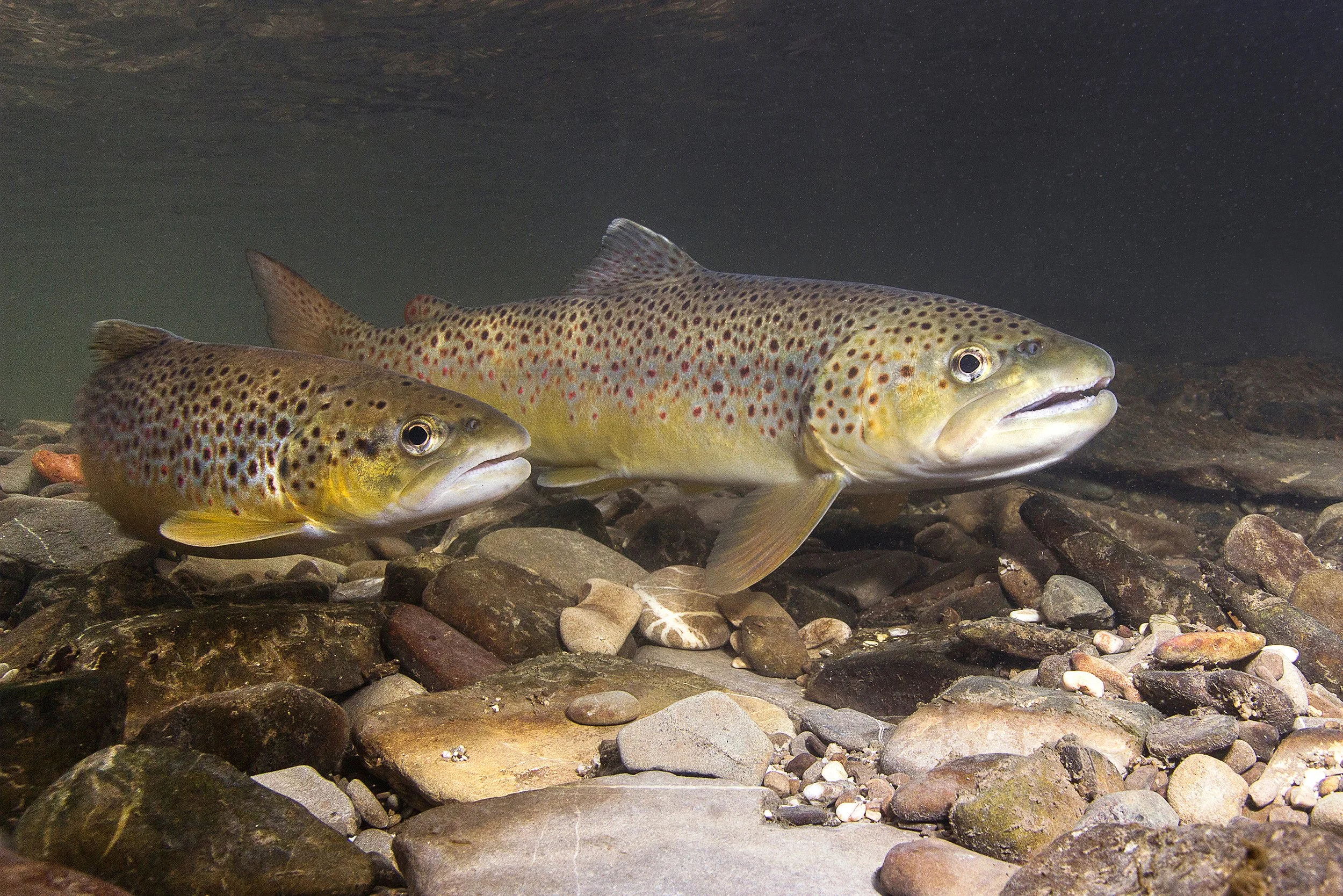
A Beloved Stranger: The Brown Trout in the St. George River
Georges River Land Trust — Living River Species Series
Introduction
Walk the banks of the lower St. George River on a cool May evening and watch the surface carefully. If you see a large, deliberate rise — a fish taking something with the unhurried confidence of a creature that knows it owns the pool — there's a good chance you're looking at a brown trout. Salmo trutta is one of the most celebrated sport fish in the world, a fish of outsized reputation and genuine beauty. It is also, in the strictest sense, a guest in this watershed — one whose arrival more than a century ago set in motion changes that Maine anglers and conservationists are still reckoning with today.
Natural History
Brown trout are native to Europe and western Asia, where they inhabit cold, clear rivers and lakes from the British Isles to the mountains of Central Asia. They were first introduced to North America in 1883, when eggs from German and Scottish strains arrived in Michigan and were quickly distributed to rivers and lakes across the continent. Maine received its first brown trout not long after, and the fish established itself readily in the St. George River system and many other watersheds across the state.
They are beautiful fish — golden-flanked and spotted with black and rust-red, each marked slightly differently, like a painting done in variations. They are also adaptable in ways that native trout are not. Brown trout tolerate warmer water temperatures and higher levels of disturbance than brook trout, which allows them to thrive in river reaches where native fish struggle. They are famously wary — large individuals especially are nocturnal hunters, feeding under the cover of darkness and retreating to deep pools by day. This wariness is much of what makes them so prized by fly anglers.
Brown trout feed broadly: aquatic insects, crayfish, small fish, frogs, and occasionally small mammals that find themselves in the wrong place. Large fish become predominantly piscivorous — meaning they eat mostly other fish — which is ecologically significant in ways we'll come back to.
Identification Tips
Brown trout show golden-brown to olive flanks fading to a creamy belly, scattered with large black spots (often ringed in a pale halo) plus scattered rusty orange-red spots — a mix of colors no other trout in the watershed carries together. The tail is only slightly forked, nearly square-edged on large fish, unlike the deeply forked tail of a landlocked salmon. Unlike brook trout, brown trout lack dark worm-like markings on the back and don't have the white-edged lower fins. Large individuals often show a heavier, hook-jawed profile, especially spawning males, and a habit of vanishing into undercut banks the instant they sense movement — a good behavioral clue alongside the coloration.
Relationship with Native Fish
This is where the story of the brown trout becomes more complicated, and more interesting.
The St. George River watershed is native brook trout water. Salvelinus fontinalis — the brookie — evolved here alongside this landscape over thousands of years, adapted to its cold springs, shaded tributaries, and seasonal rhythms. It was the fish that Wabanaki peoples harvested, that early European settlers ate, and that defined the rivers of Midcoast Maine long before anyone thought to import something from Europe.
Brown trout compete directly with brook trout for territory, food, and spawning habitat. They are more aggressive and better able to hold prime lies in the current. Over time, in reaches where both species are present, brown trout tend to push brook trout into smaller, cooler headwater streams — the very places where cold, clean water persists. In some rivers, brown trout have also been documented preying on juvenile brook trout and young Atlantic salmon.
This doesn't make brown trout villains. They are superb wild animals doing what wild animals do. But it does mean that protecting native brook trout in the St. George watershed requires protecting the cold, clean, shaded headwater streams where they can still hold their own — the places where the water is too cold and the current too quick for brown trout to dominate. Healthy riparian buffers, intact forest cover, and clean gravel spawning beds aren't just good for the landscape. They're the brook trout's best defense.
Role in the St. George River Watershed
In the reaches where they are established, brown trout are now a functional part of the river's food web. They are apex predators in many pools and runs, regulating populations of smaller fish and invertebrates. They are also a significant driver of the watershed's recreational economy — brown trout fishing draws anglers who support local businesses, license fees that fund IF&W management, and a culture of river stewardship among the fishing community.
Seasonal Notes
Brown trout are most active in spring and fall, when water temperatures sit in their preferred range of roughly 55–65°F. May and early June offer some of the best dry fly fishing of the year, as trout rise to hatching insects on cool evenings. Summer pushes them into deeper, cooler water, where they become harder to find. October and November bring the fall spawn — males develop vivid coloration and compete for females on gravel beds in tributary streams. They can be taken by ice anglers in winter as well, though they are less commonly targeted under the ice than salmon or perch.
Fun Fact
The brown trout introduced to American waters came from two slightly different European strains — the "German brown" from Bavaria and the "Loch Leven trout" from Scotland. They were considered separate species at the time. Over more than a century of coexistence in American rivers and hatcheries, the two strains have interbred so thoroughly that the distinction has been largely erased. The fish in the St. George River today is a hybrid of continents, as at home in a Maine pool as it ever was on the other side of the Atlantic.
Want to Learn More?
- Maine IF&W — Brown Trout — Species profile, stocking information, and fishing regulations from Maine's fisheries managers.
- Maine IF&W — Brook Trout Conservation — The native context: Maine's efforts to protect and restore wild brook trout populations.
- Trout Unlimited Maine Council — The leading advocacy organization for cold-water fisheries in Maine, with active work in the St. George watershed.
- Native Fish Coalition — Maine — A strong voice for the protection of native brook trout and Atlantic salmon from competition and hybridization.
The Living River blog series is published by St. George Consulting in support of the Georges River Land Trust and the Maine Council of Trout Unlimited. To explore the important work these organizations are doing to conserve and restore Maine's landscapes, visit georgesriver.org and tumaine.org.