The Conifer That Lets Go: Tamarack
Georges River Land Trust — Living River Species Series
Introduction
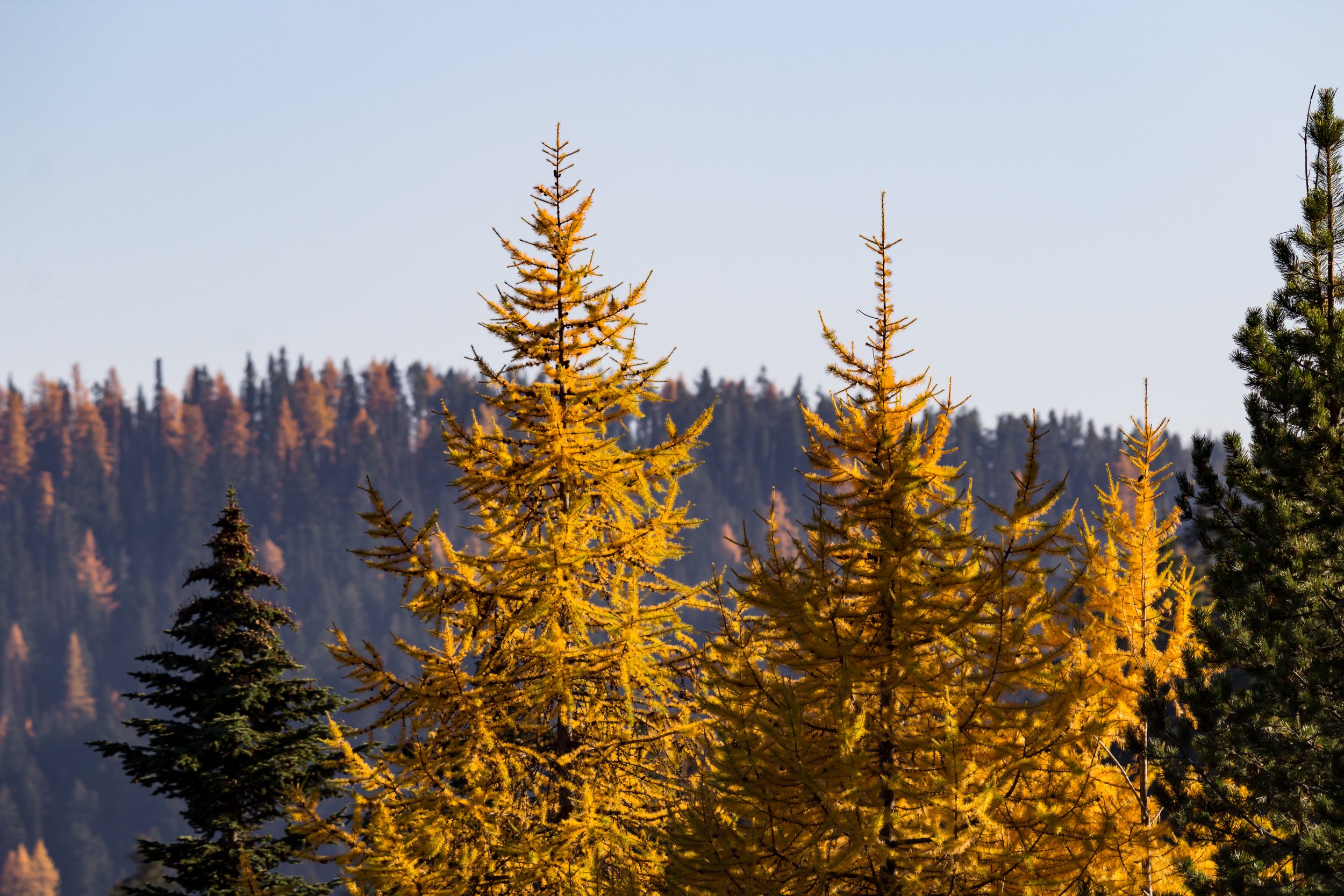
Late in the fall, after most trees have dropped their leaves, a few trees in Maine's swamps and bogs suddenly blaze gold. They look like evergreens, but they're turning color like hardwoods. These are tamaracks (Larix laricina), Maine's only native conifer that drops all of its needles every autumn. Right now they're putting on one of the last color shows of the season.
Natural History
Tamarack, also called eastern larch or hackmatack, is a slender tree with a narrow, pyramid-shaped crown, typically 50 to 60 feet tall. Its bright green needles are about an inch long and grow in clusters of eight or more on short spur branches, up to 50 in a cluster on older twigs. Its small, upright cones are about ¾ inch long and often stay on the tree into the next year. The bark flakes into small, reddish-brown scales.
Each fall the needles turn yellow and drop, and each spring the tree grows a fresh set. No other New England conifer does this.
Tamarack grows fast but is extremely intolerant of shade. It's often the first tree to move onto open bogs, rooting in the floating mat of sphagnum moss. As the peat firms up over time, shade-tolerant conifers eventually take its place. Tamaracks can live about 180 years. Maine's champion, in the northern Maine township T13 R8 WELS, was listed at 92 feet tall in 2008.
Role in the St. George River Watershed
In Maine, tamarack grows in scattered stands throughout the state, mostly in cool, swampy places like bogs, fens and wooded swamps, and occasionally on drier ground. It also feeds a surprising range of wildlife, from crossbills to porcupines.
Its hard, strong, durable wood also shaped Maine's maritime history. Shipbuilders used its root buttresses, called "knees," and boatbuilders used hackmatack for stems and keels on small boats.
A Web of Relationships
- Plants: Tamarack pioneers open bogs on mats of sphagnum moss, and is later replaced by more shade-tolerant conifers as the peat firms up.
- Birds: Pine siskins and crossbills eat the seeds, and spruce grouse eat the needles and buds. In northern Minnesota, ospreys favor dead tamaracks for nesting.
- Mammals: Red squirrels cut and cache the cones, while mice, voles and shrews eat fallen seeds. Snowshoe hares eat the twigs and bark, and porcupines gnaw the inner bark.
- Insects: The larch sawfly is tamarack's most destructive pest; six to nine years of heavy feeding can kill trees. The larch casebearer has also caused widespread damage.
- Fungi: Tamarack forms partnerships with ectomycorrhizal fungi that grow on its living roots. In one study, tamarack seedlings partnered with the fungus Laccaria laccata grew best in diameter, shoot volume and weight. Larches even have their own mushrooms. Suillus grevillei, a sticky, orange-yellow bolete, partners only with larches. Its North American look-alike, Suillus clintonianus, which most field guides still label S. grevillei, associates mainly with native North American larches.
Wabanaki Connections
The Native Plant Trust notes that Native peoples of northern New England and Canada used tamarack roots to stitch together birch-bark canoes. The name "hackmatack" itself is traced to an Abenaki word meaning "wood used for snowshoes." This knowledge belongs to living Wabanaki communities, and readers who want to learn more are encouraged to seek out Wabanaki voices and Wabanaki-led organizations.
Seasonal Notes
Right now (late October and November): Look for golden tamaracks in bogs and wet woods. They turn yellow and drop their needles after most other trees have lost their leaves.
Winter: Look for small cones, which often stay on the bare branches into the next year.
Spring: Tamarack grows a fresh set of needles.
Summer and fall: Larch boletes fruit on the ground in groups.
Fun Fact
Tamarack roots grow out from the trunk at about a 90-degree angle. That made hackmatack the typical wood for ship knees, the right-angled braces fitted where two timbers meet. Shipbuilders didn't have to bend the wood; the tree had already grown it into shape, and hackmatack was prized for being both strong and light.
Want to Learn More?
- Maine Forest Service: Tamarack: Identification, uses and Maine's champion tree.
- Go Botany: Larix laricina: New England habitat, identification and cultural notes.
- USDA Forest Service Fire Effects Information System: Tamarack: In-depth ecology and wildlife use.
- MushroomExpert: Suillus grevillei: The larch-loving mushroom and its North American look-alike.
- Penobscot Bay History: Knee: Why hackmatack made the best ship knees.
The Living River blog series is published by St. George Consulting in support of the Georges River Land Trust and the Maine Council of Trout Unlimited. To explore the important work these organizations are doing to conserve and restore Maine's landscapes, visit georgesriver.org and tumaine.org.