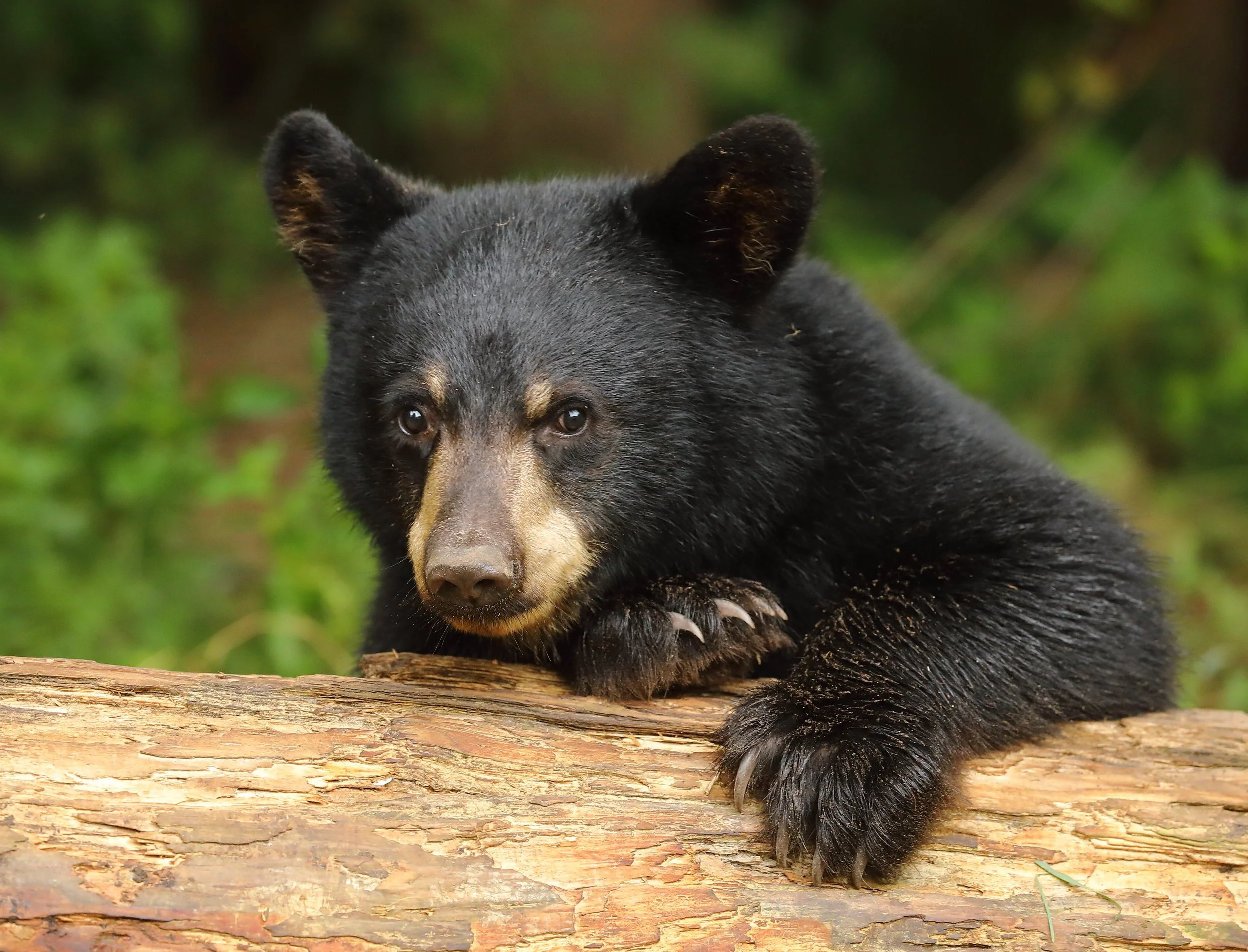
Fattening Up for Winter: Black Bear
Georges River Land Trust — Living River Species Series
Introduction
Right now, somewhere in the woods of the St. George watershed, a black bear may be crunching through a pile of beechnuts, eating as much as it possibly can. Late fall is a race against the calendar for bears. They need to pack on fat before they settle into their winter dens. American black bears (Ursus americanus) are Maine's largest carnivores, but they're mostly shy, quiet, and rarely seen. Their story is one of patience, appetite, and a remarkable winter rest.
Natural History
Despite the name, black bears in Maine are almost always black, with a brown muzzle. Adult males average about 250 pounds and measure 5 to 6 feet from nose to tail. Females are smaller, averaging about 150 pounds. Bears are heaviest in late fall, after weeks of feasting.
Black bears are omnivores, and their diet shifts with the seasons. In spring, they eat fresh grasses, clover, and tree buds. In summer, they turn to raspberries, blackberries, and blueberries. In fall, they feast on beechnuts, acorns, and hazelnuts, eating roughly 20,000 calories a day. Year-round, they also eat insects, carrion, and the occasional small animal.
Bears breed in summer, but the embryo waits to develop until the female has settled into her winter den. Cubs are born in January, in the den, weighing only about 12 ounces, smaller than a can of soup. By mid-April, when their mother leads them out, they weigh 4 to 10 pounds. Cubs stay with their mother for about 16 months, so females usually give birth only every other year.
Role in the St. George River Watershed
Maine has about 25,000 black bears, one of the largest populations in the eastern United States. Bears are most common in northern, northwestern, and eastern Maine and less common in settled central-coastal areas like the Midcoast, but they do live in the St. George watershed's larger blocks of forest.
Bears need big, connected landscapes, with forests for cover, beech and oak stands for fall food, and berry patches and wetlands for summer feeding. Protecting large, unbroken tracts of land, as land trusts do, helps make room for wide-ranging animals like bears.
A Web of Relationships
- Plants: Bears depend on American beech, oaks, hazelnut, raspberries, blackberries, and blueberries. In turn, bears help plants by spreading seeds in their droppings, often far from the parent plant.
- Insects: Bears love insects. They tear apart logs and stumps for ants and beetle grubs and raid nests of bees and wasps.
- Mammals: Bears occasionally prey on young deer or moose in late spring and scavenge carrion when they find it.
- Fungi: Bears have an indirect link to fungi. Many of the soft, rotting logs they rip open for insects have been broken down by wood-decay fungi, which make the wood home to the ants and grubs bears seek.
Wabanaki Connections
In the Mi'kmaw night sky story Muin and the Seven Bird Hunters, the four stars of the Big Dipper's bowl are Muin, the bear, and the handle and nearby stars are birds hunting her. As the seasons turn, the constellation shifts across the sky. In mid-autumn, Robin finally catches Muin, and her blood colors the leaves of the sky maple. That, the story says, is why maples on earth turn the reddest in fall. In winter, Muin's spirit enters another bear sleeping in its den, and the cycle begins again. This knowledge belongs to living Wabanaki communities, and readers can learn more from the bilingual Mi'kmaq-English book and from Wabanaki organizations like the Abbe Museum.
Seasonal Notes
Right now, in late October and early November, bears are finishing their fall feast and preparing to den. Many will enter their dens in late fall, where they rest through winter without eating or drinking, living on their fat. On clear evenings, look north for the Big Dipper, low in the sky this time of year, the bear of the Mi'kmaw story. In January, cubs are born in the den. In April, bears emerge hungry. Summer is berry season.
Living with bears: From April through November, take down bird feeders, store trash securely until pickup day, and clean grills to avoid attracting bears.
Fun Fact
During winter, black bears don't eat, drink, or relieve themselves for months, yet mother bears still give birth and nurse their cubs. They survive entirely on the fat they built up in fall, which is why that autumn feast of beechnuts and acorns matters so much.
Want to Learn More?
- Maine Department of Inland Fisheries and Wildlife: Black Bears: Maine's bear biology, research program, and tips for living with bears.
- CM Reviews: Muin and the Seven Bird Hunters: A review of the bilingual Mi'kmaw night sky story.
- Abbe Museum Shop: Muin and the Seven Bird Hunters: Where to find the book.
The Living River blog series is published by St. George Consulting in support of the Georges River Land Trust and the Maine Council of Trout Unlimited. To explore the important work these organizations are doing to conserve and restore Maine's landscapes, visit georgesriver.org and tumaine.org.