Painted Turtle
Sun, Shell, and Stillwater: The Painted Turtle
St. George Consulting — Living River Series
Introduction
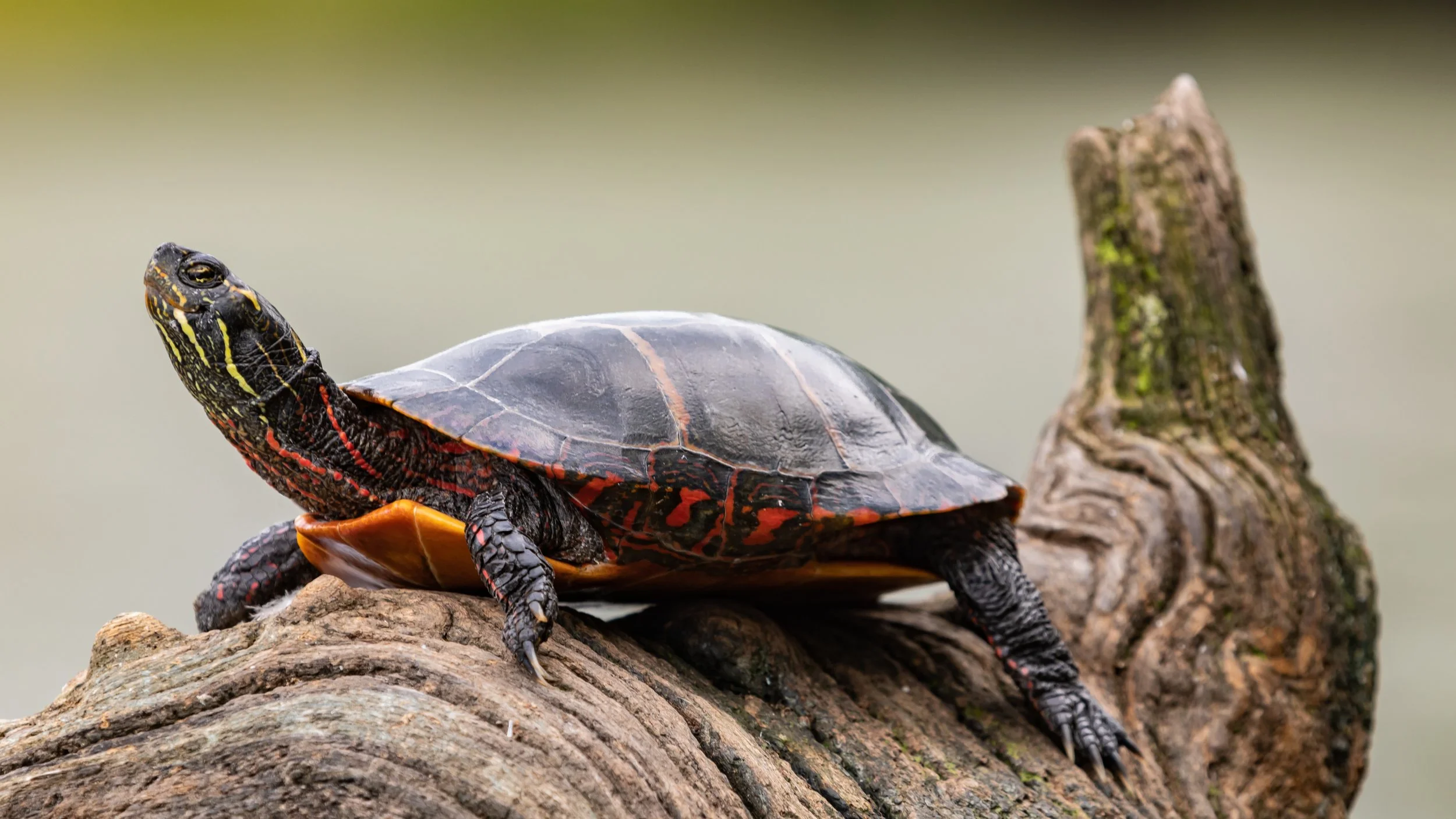
On any warm spring day along the St. George River, if you move quietly and scan the logs and rocks along the water's edge, you are likely to find them: painted turtles (Chrysemys picta), lined up in a row with their necks stretched long and their legs splayed wide, soaking in the sun with an air of complete contentment. They are among the most familiar reptiles in the Northeast, and yet there is something endlessly pleasing about spotting them — a reminder that this small, sun-warmed creature has been doing exactly this along Maine's waterways for millions of years. The painted turtle is a living artifact, and the St. George watershed is lucky to have them.
Natural History
The painted turtle is the most widespread native turtle in North America, found from the Atlantic coast to the Pacific Northwest. Maine sits near the northern edge of its range, which makes our turtles particularly remarkable — they endure winters that would seem impossibly harsh for a cold-blooded animal.
They are beautifully marked: a dark olive or black shell edged in red and yellow, a yellow-striped neck and head, and the vivid red-and-yellow patterning along the shell's margins that gives them their name. Adults are typically five to seven inches long, with females running slightly larger than males.
Painted turtles are omnivores, eating aquatic plants, algae, insects, crayfish, snails, small fish, and carrion — whatever the pond or slow river offers. They are almost entirely aquatic, leaving the water mainly to bask and, in June, for females to lay eggs. Nesting females wander surprisingly far from water in search of sunny, sandy or loose-soiled sites, often crossing roads in the process — one of their most serious modern hazards.
Eggs hatch in late summer, but here is where Maine's painted turtles reveal their extraordinary cold-hardiness: hatchlings often overwinter in the nest, surviving temperatures that dip below freezing by producing a natural antifreeze — glucose that floods their tissues and prevents ice crystals from forming inside their cells. They emerge in spring as if nothing unusual happened.
Role in the St. George River Watershed
Painted turtles are quiet but meaningful participants in the watershed's ecology.
As omnivores, they help regulate aquatic invertebrate populations — snails, aquatic insects, and small crustaceans — while also consuming carrion and plant material, making them modest but real contributors to nutrient cycling in ponds and slow river reaches. Think of them as generalist cleaners of the aquatic environment.
Their basking logs and rocks are shared real estate. You'll often find painted turtles sunning alongside map turtles (less common here) and occasionally snapping turtles, whose relationship with painted turtles is more fraught — snapping turtles will prey on painted turtle eggs and hatchlings given the opportunity.
Raccoons, skunks, and foxes are the primary predators of painted turtle nests, and nest predation rates can be extremely high — in some populations, the majority of nests are destroyed each year. The turtles offset this by living a long time: a painted turtle can live 35 to 40 years, giving it many seasons of reproductive effort. Mink and great blue herons occasionally take hatchlings and juveniles near the water's edge.
The aquatic plants of the watershed — pondweeds, water lilies, and algae — are both food and cover for painted turtles, and the slow, weedy backwaters and pond margins they favor are the same habitats that support dragonflies, damselflies, and freshwater mussels. A healthy painted turtle population is a good indicator that these quieter, less-noticed corners of the watershed are intact.
Seasonal Notes
Painted turtles emerge from hibernation in April, often while ice still lingers on shaded pond edges. Basking peaks in May and June, when the animals need to warm themselves after winter and females are building energy for egg production. Nesting happens in June, typically on south-facing, open ground — roadsides, gravel shoulders, and garden beds are common sites, which puts females in harm's way. Hatchlings appear in August and September and may overwinter in the nest, emerging the following April. By October, adults have returned to the pond bottom to hibernate in the mud.
Fun Fact
In painted turtles — and several other turtle species — the temperature of the nest determines the sex of the hatchlings. Warmer nests produce mostly females; cooler nests produce mostly males. This means that climate change, which is warming soils across the Northeast, may be quietly skewing turtle populations toward females over time. Researchers are actively studying what this means for the long-term health of turtle populations.
Want to Learn More?
- Maine IF&W — Reptiles and Amphibians — Maine's wildlife agency overview of native turtle species and their status.
- Maine Audubon — Turtle Road Mortality — Information on the serious threat road crossings pose to nesting turtles, and how to help.
- Maine Herpetological Society — A great resource for learning more about Maine's reptiles and amphibians.
- iNaturalist — Painted Turtle — Observe sightings across the region and contribute your own.
The Living River blog series is published by St. George Consulting in support of the Georges River Land Trust and the Maine Council of Trout Unlimited. To explore the important work these organizations are doing to conserve and restore Maine's landscapes, visit georgesriver.org and tumaine.org.