Mayflies
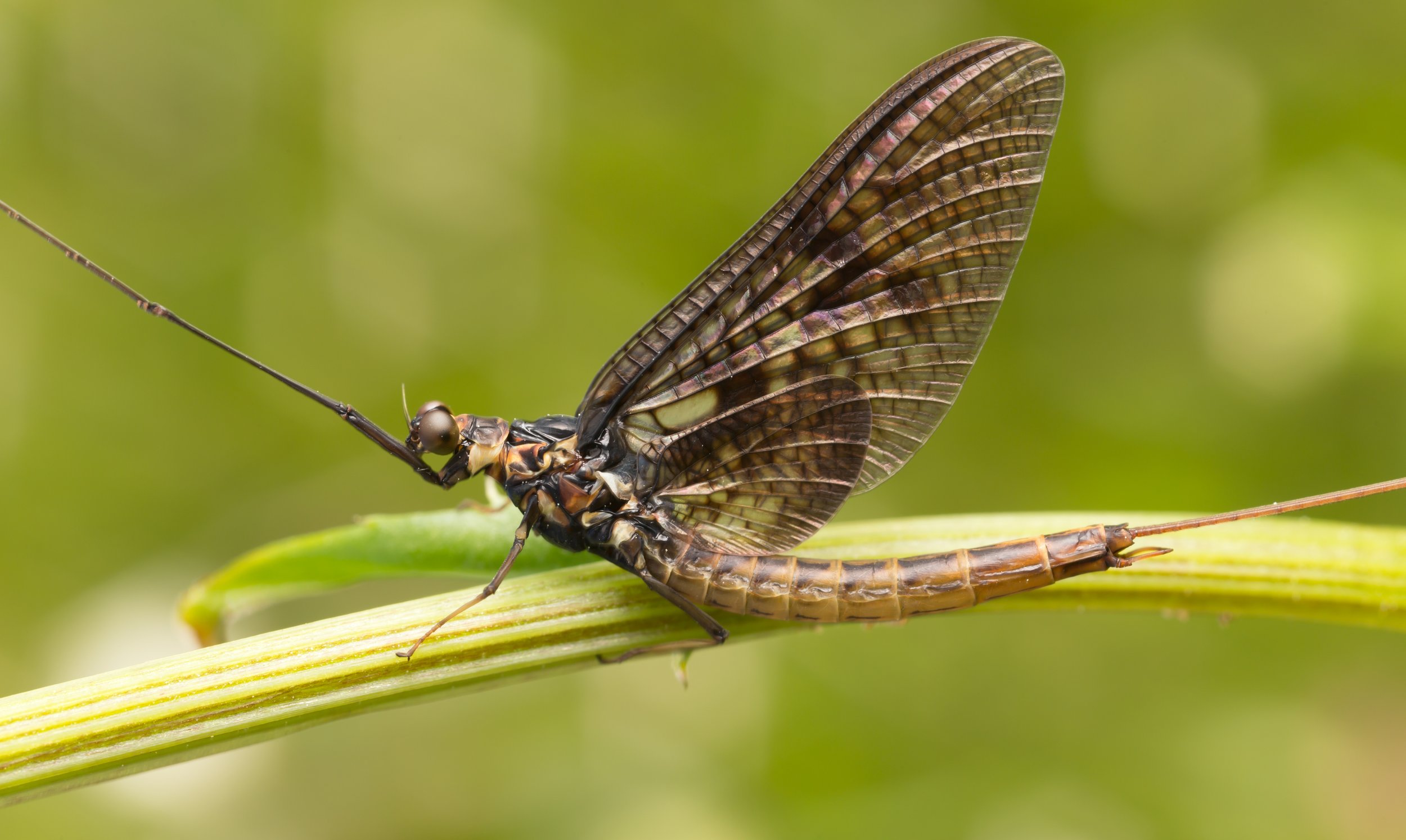
Born in the River, Gone in a Day: The Mayfly
St. George Consulting — Living River Series
A Life Measured in Hours
On a warm May evening along the St. George River, you might notice something that looks like a light snowfall rising from the water — thousands of delicate winged insects drifting upward in spiraling columns, catching the last of the day's light. If you're a fly fisher, your heart quickens. If you're a brook trout, you're already moving. If you're a curious passerby, you've just witnessed one of the most remarkable events in the river's calendar: a mayfly hatch.
Mayflies have been doing this for roughly 350 million years, making them one of the oldest groups of winged insects on Earth. What they accomplish in a few hours of adult life — after spending nearly a year underwater — is a small miracle worth stopping to watch.
Natural History: Mostly Water, Briefly Sky
Mayflies belong to the order Ephemeroptera, from the Greek word for "lasting a day" — a fitting name for animals whose adult lives are measured in hours. But that brief finale is only the final act of a much longer story.
After eggs hatch, mayfly nymphs spend most of their lives — several months to nearly two years, depending on species — living on the streambed. They breathe through feathery gills, cling to rocks and submerged debris, and feed on algae, diatoms, and fine organic matter. During this time they molt repeatedly, sometimes 20 times or more, growing gradually toward adulthood.
When the time comes, the nymph rises through the water column and splits its skin at the surface, emerging as a winged but not-quite-adult form called a subimago — what fly fishers call a "dun." This stage lasts anywhere from a few minutes to a day. Then comes something unique in the insect world: the subimago molts one final time, shedding its skin to become the true adult, or imago (known to anglers as a "spinner"). Mayflies are the only insects on Earth that molt after they already have wings.
The adult has no functional mouthparts. It will never eat. Fueled entirely by energy stored during its long nymph stage, it has one purpose: find a mate, lay eggs on the water, and complete the cycle. Most adult mayflies live less than 24 hours. A few species survive only 90 minutes.
Role in the St. George River Watershed
Few creatures are more important to the St. George's food web than the mayfly. Nymphs are a year-round staple for brook trout, brown trout, and many other fish throughout the watershed. Emerging adults feed swallows, flycatchers, bats, and kingfishers. Even the spent adults that fall onto the water surface after mating — what anglers call "spinners" — provide another feeding opportunity for fish rising at dusk.
Mayflies are also one of the best indicators of river health that exist. Along with stoneflies and caddisflies, they form what biologists call the EPT index — a standard measure of river water quality. Healthy mayfly populations mean clean, well-oxygenated water. Their absence from a stretch of river is a warning sign worth investigating.
The St. George River is known among fly fishers for its red quill hatch in May — a reliable emergence of one of the most important mayfly species in the Northeast. The stretch below Sennebec Pond can fish beautifully during this hatch, with trout rising actively in the evening hours.
Seasonal Notes
Mayfly hatches on the St. George begin in mid-May and continue through June, with different species emerging in sequence. Some extend into summer and early fall. The most dramatic hatches happen on calm, overcast evenings when water temperatures are right — conditions that concentrate the emergence and send every trout in the river looking up.
Even if you're not fishing, an evening hatch is worth seeking out.
Fun Fact
Mayflies are the only insects in the world that molt after they already have functional wings. Every other winged insect reaches its final form at the moment it first grows wings. The mayfly takes one more step — shedding that intermediate winged stage to become its true adult self. Scientists consider this an ancient trait, a living window into the very origins of insect flight.
Learn More
- Maine DEP — Biomonitoring: Mayflies
- Maine IFW — Rare Mayflies
- All About Birds — Mayfly (aquatic insect overview)
- The Freshwater Blog — The Mayfly's Lifecycle
- Northern Woodlands — Outside Story (search "mayfly")
- EPT Index and Stream Health — The Swamp School
The Living River blog series is published by St. George Consulting in support of the Georges River Land Trust and the Maine Council of Trout Unlimited. To explore the important work these organizations are doing to conserve and restore Maine's landscapes, visit georgesriver.org and tumaine.org.