Hawthornes
Thorns, Berries, and Centuries of Story: Meet the Hawthorns
Georges River Land Trust — Living River Species Series
Introduction
Few plants in the Maine landscape are as quietly generous — or as easily overlooked — as the hawthorns. Tucked along old stone walls, at the edges of fields, and threading through the shrubby corridors of streambanks, these thorny small trees have been feeding wildlife, sheltering birds, and sustaining human communities for as long as people have lived in this watershed. They bloom like a celebration in May and blaze with red berries come fall. They're worth a much closer look — just watch out for the thorns.
Natural History
Hawthorns (Crataegus spp.) belong to the rose family, Rosaceae, which makes them cousins to apples, cherries, and wild roses. The genus is notoriously sprawling — there are hundreds of species worldwide, and botanists have been arguing about how to sort them for generations. In Midcoast Maine, you're most likely to encounter native species like fireberry hawthorn (C. chrysocarpa) and fanleaf hawthorn (C. macrosperma), along with the introduced common hawthorn (C. monogyna) that arrived with European settlers.
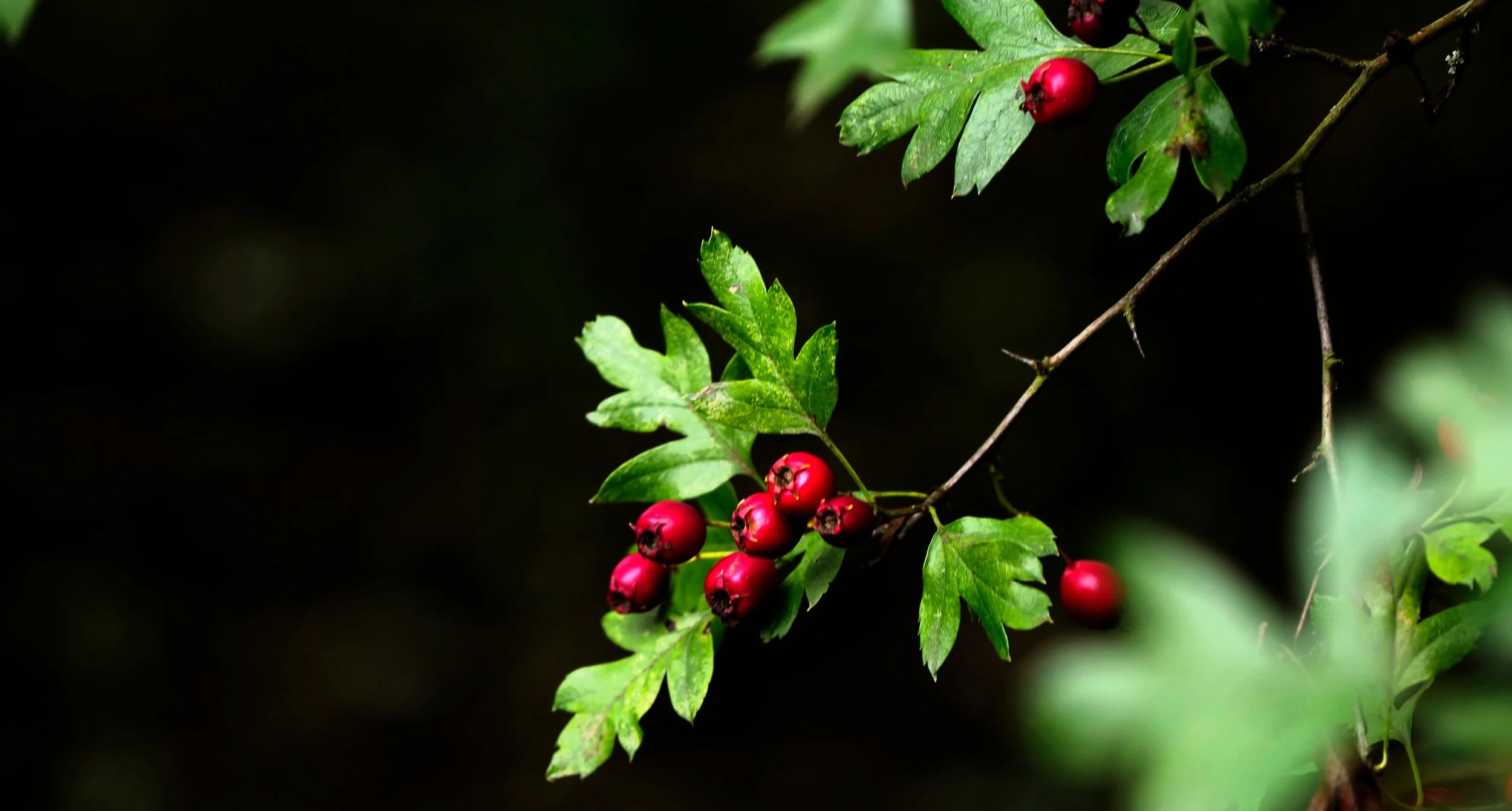
What hawthorns share across all their variety: clusters of white five-petaled flowers in late spring; dense, twisting branches armed with stiff, sharp thorns (technically modified stems); and small, apple-like fruits called haws that ripen to red, orange, or deep burgundy by late summer and persist well into winter.
The thorns are not just formidable — they're functional. Dense hawthorn thickets are among the safest nesting spots in the landscape. The tangle of spines keeps raccoons, crows, and other nest predators at bay, making hawthorns a favorite of songbirds like gray catbirds, brown thrashers, cedar waxwings, and several warbler species.
Identification Tips
Hawthorns are identified by their combination of stiff, sharp thorns growing directly from the branches, clusters of white five-petaled flowers in May, and small apple-like fruits called haws that ripen red, orange, or burgundy by fall. Leaves vary by species but are typically toothed or lobed, alternating along thorny, zigzagging twigs, and the bark is gray and scaly on older wood. Because Crataegus is a notoriously difficult genus to sort to exact species, focus on the reliable combination of thorns, rose-family flowers, and persistent haws rather than trying to pin down an exact species — that combination is not shared by any other tree or shrub in the watershed. Dense, thorny thickets found along old stone walls, field edges, and streambanks are a strong habitat clue, since hawthorns favor these open, semi-disturbed margins over deep forest.
Wabanaki Uses
For the Wabanaki peoples — including the Penobscot, Passamaquoddy, and Abenaki nations whose homelands encompass this watershed — hawthorns were both food and medicine. The haws were eaten fresh in fall and dried for winter use, sometimes incorporated into pemmican-style preparations mixed with fat and dried meat. They are starchy and mildly sweet, something like a dry rose hip crossed with a small crabapple.
Medicinally, hawthorn berries, leaves, and flowers were used to support heart health and digestion — uses that modern herbalists and researchers have since validated. Hawthorn is now one of the most studied plants in cardiovascular herbal medicine. The thorns themselves had practical applications too, serving as needles, awls, and fish hooks. The hard, close-grained wood was shaped into tool handles and small implements.
Role in the St. George River Watershed
Along the St. George River and the wetland edges, old fields, and upland margins of its watershed, hawthorns are ecological anchors. Their dense structure provides year-round shelter — nesting cover in summer, thermal refuge in winter — and their haws are a critical late-season food source for wildlife when other fruits are exhausted.
American robins, cedar waxwings, ruffed grouse, wild turkeys, white-tailed deer, foxes, and black bears all rely on haws in fall and early winter. In lean years, a hawthorn thicket heavy with fruit can make a measurable difference for overwintering wildlife.
Hawthorns also play a subtle but important role in forest succession. Their thorny thickets protect young tree seedlings from deer browse, acting as a nursery for the next generation of forest. In that sense, they're not just inhabitants of the landscape — they help build it.
Seasonal Notes
Hawthorns are a plant to watch all year in Midcoast Maine. In May, their white flower clusters are among the showiest blooms of the season, fragrant and buzzing with native bees and early butterflies. Through summer, the developing haws are easy to spot — small green clusters that slowly swell and deepen in color. By September and October, a fruiting hawthorn is a wildlife magnet, with flocks of waxwings and robins working the branches. In winter, persistent clusters of dried haws stand out against snow, still providing nutrition for birds on the hardest days of the year.
Fun Fact
The word hawthorn is old English — haw simply meant "hedge," and these trees were planted throughout medieval England as living fences. They were so central to the rural landscape that May Day celebrations (held when hawthorns bloom) became synonymous with the tree itself. In some parts of Britain, hawthorns are still called mayflowers — the same name the Pilgrims gave their ship, perhaps in homage to the blossoming hedgerows they left behind.
Want to Learn More?
- USDA Plants Database — Crataegus spp. — Range maps, taxonomy, and ecological data for North American hawthorns.
- Native Plant Trust: Go Botany — Crataegus — Excellent identification tool for New England hawthorn species, with photos and keys.
- Wabanaki Medicine and Moons Educators Guide — Maine Dept. of Education — A rich overview of traditional Wabanaki plant and medicine knowledge, produced in partnership with tribal educators.
- University of Maine Cooperative Extension: Native Shrubs for Wildlife — Guidance on native woody plants and their value for Maine wildlife.
The Living River blog series is published by St. George Consulting in support of the Georges River Land Trust and the Maine Council of Trout Unlimited. To explore the important work these organizations are doing to conserve and restore Maine's landscapes, visit georgesriver.org and tumaine.org.