Great Blue Heron
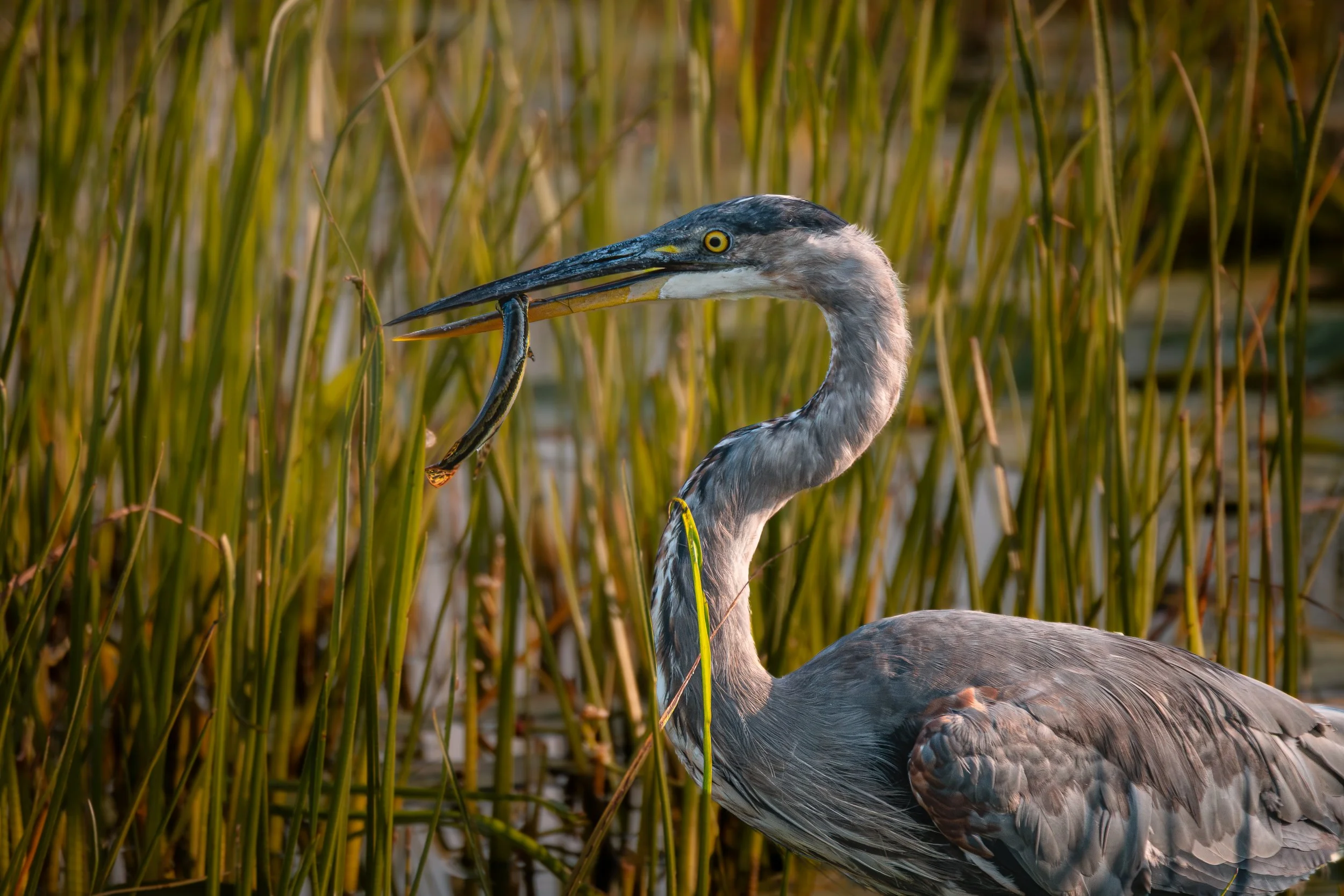
The Ancient Fisherman: Great Blue Heron of the St. George
Georges River Land Trust — Living River Species Series
A Stillness That Commands Attention
Standing motionless at the river's edge, blue-gray as weathered slate, the great blue heron looks like something out of the prehistoric record. There's a reason people routinely mistake it for a pterodactyl in flight — something about the slow, deliberate wingbeats and the folded neck suggests a creature from a much older world.
Once you start looking for them, you'll find great blue herons everywhere — wading the shallows at Sennebec Pond, standing sentinel along the tidal stretches near Thomaston, or lifting heavily from a marshy cove with that low, prehistoric kraaank that carries surprisingly far.
Natural History: Patient, Powerful, Precise
The great blue heron (Ardea herodias) is the largest heron in North America. Standing up to four and a half feet tall with a wingspan approaching six feet, it is an imposing presence — though much of that size is feathers and hollow bones, and it weighs only about five and a half pounds.
Its hunting strategy is a study in patience. A heron will stand absolutely motionless for long minutes, or wade forward so slowly the water barely ripples, waiting for prey to come within range. Then, in a fraction of a second, that long neck uncoils like a spring and the dagger bill strikes. The S-curve of the neck isn't just elegance — it's a coiled mechanism, loaded and ready.
Their diet is broad: fish are the mainstay, but great blue herons will also take frogs, snakes, crayfish, voles, and large insects. Essentially, if it fits in the bill and lives near water, a heron has tried it.
Nesting is a communal affair. Great blue herons gather in colonies called rookeries or heronries — sometimes dozens or even hundreds of pairs together, building bulky stick-platform nests high in tall trees. These sites can be active for generations. Both parents incubate the eggs and feed the chicks, which grow with surprising speed.
Identification Tips
A great blue heron's slate-blue-gray body, long yellow bill, and S-curved neck make it hard to confuse with anything else in the watershed except possibly a great egret, which is entirely white. In flight, check the neck: herons tuck their necks into a tight S-curve against the body, while similarly large, long-legged birds like sandhill cranes fly with necks fully extended — a reliable rule for identifying any large bird overhead. Look also for long, trailing plumes on the head, neck, and back during breeding season, and the slow, deep, almost labored wingbeats that distinguish heron flight from the more urgent wingbeats of most waterfowl. Standing herons are often mistaken for statues; a slow, deliberate wade forward, or a lightning-fast neck strike, are the tells that it's alive and hunting.
Role in the St. George River Watershed
Great blue herons are top-of-the-food-chain predators in the riparian world. They help regulate fish and amphibian populations and serve as a living gauge of ecosystem health — a heron hunting productively in a stretch of river tells you something good about the water quality and the abundance of life beneath the surface.
They are also an umbrella species: protecting the habitats herons need — undisturbed wetlands, clean rivers, forested uplands near water for nesting — benefits a whole community of other wildlife at the same time. Beaver flowages, wooded shorelines, and shallow marshy coves throughout the St. George watershed are heron country, and keeping those places intact matters.
Maine has seen a concerning 31% decline in nesting pairs since 2009, enough that the great blue heron is now listed as a Species of Special Concern in the state. Disturbance at rookeries — even well-meaning human visits during nesting season — can cause entire colonies to abandon their nests. Giving these birds space when they need it most is one of the simplest things we can do for them.
Seasonal Notes
Great blue herons are year-round residents in the St. George watershed, though their numbers swell in summer with breeding birds and thin in the coldest months when ice forces them to find open water. A few hardy individuals winter along the tidal portions of the lower river, where saltwater stays ice-free. By late February or March, nest-building activity picks up in the rookeries, and by April eggs are being incubated high in the trees — well before the leaves come in.
Summer and early fall offer the best watching, when young birds — slightly ragged, without the adult's elegant plumes — appear along the riverbanks, learning the patience their craft demands.
Fun Fact
A great blue heron's neck contains a specialized sixth vertebra that creates its distinctive S-curve — and acts like a spring-loaded launching mechanism for that lightning strike. When the bird flies, it folds that neck tightly against its body. Cranes, which look superficially similar in flight, hold their necks extended straight out. If you see a large, long-legged bird flying overhead and aren't sure what it is, check the neck: tucked in means heron.
Learn More
- All About Birds — Great Blue Heron (Cornell Lab of Ornithology)
- Maine Rivers — Great Blue Heron
- Great Blue Heron — Maine: An Encyclopedia
- Harpswell Heritage Land Trust — Nature Notes: Great Blue Heron
- Mass Audubon — Great Blue Herons
- Northern Woodlands — Gregarious Great Blue Herons
The Living River blog series is published by St. George Consulting in support of the Georges River Land Trust and the Maine Council of Trout Unlimited. To explore the important work these organizations are doing to conserve and restore Maine's landscapes, visit georgesriver.org and tumaine.org.