Fiddleheads
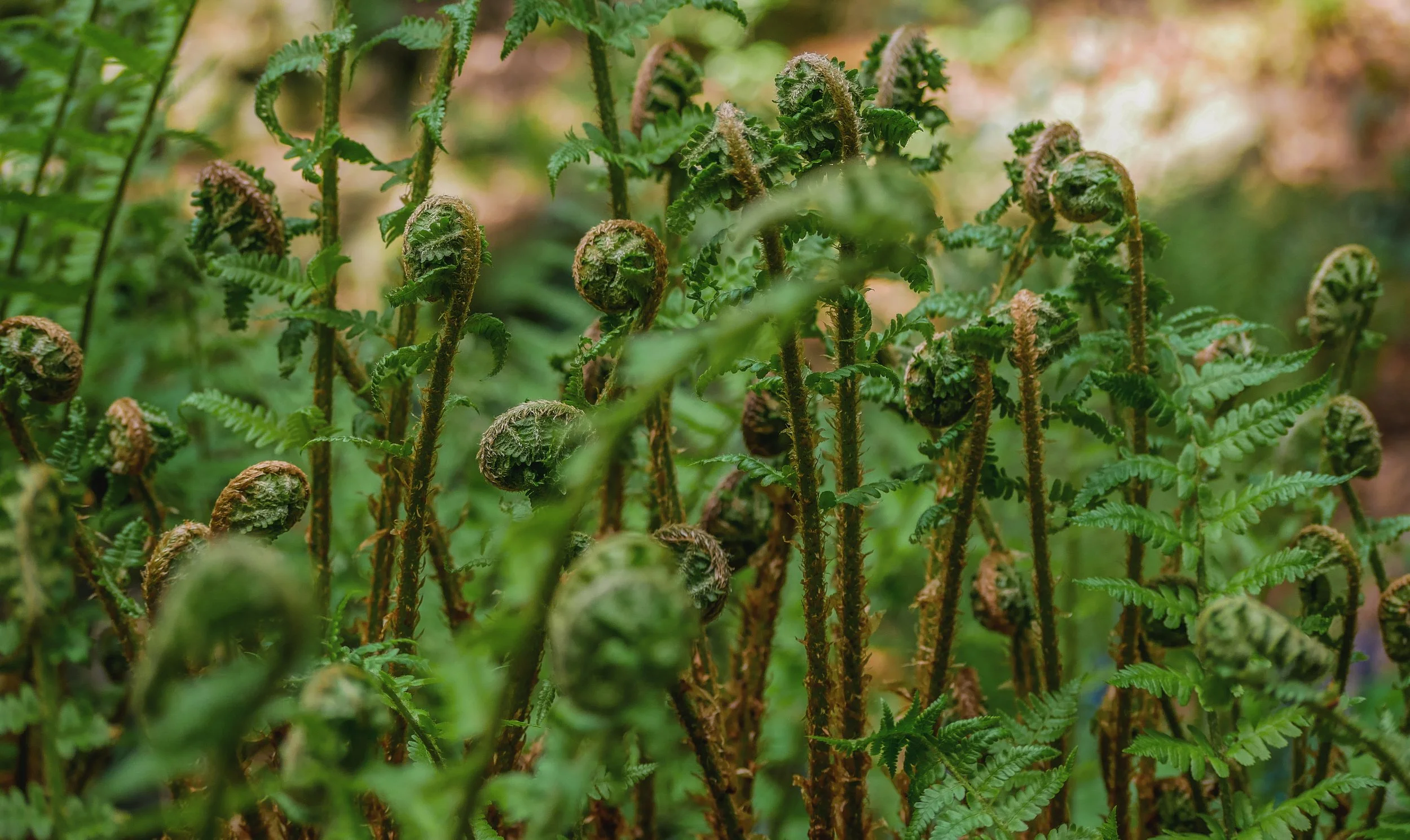
Fiddleheads: The St. George River's Springtime Scrollwork
St. George Consulting — Living River Series
Intro
Walk along the banks of the St. George River in late April, and you may find yourself face to face with one of Maine's most beloved springtime greetings: tightly coiled, jewel-green spirals pushing up through last year's leaf litter. These are fiddleheads — the young, unfurling fronds of the ostrich fern (Matteuccia struthiopteris) — and for a few short weeks they transform our floodplain forests into something that looks almost enchanted. Part vegetable, part sculpture, part calendar, fiddleheads are a quiet announcement that the cold has loosened its grip on the watershed.
A Little Natural History
The ostrich fern is a perennial that lives quietly underground for most of the year, surviving as a tough, woody crown anchored in rich, moist soil. Each spring, that crown sends up a cluster of new fronds, each one tightly rolled into the curl that gives fiddleheads their name — a shape so reminiscent of the carved scroll on a violin that the resemblance has stuck for centuries.
A fiddlehead is most recognizable by three signs: a deep U-shaped groove running along the inside of its smooth stem, a papery brown husk that flakes off easily, and that signature tight coil. As the fronds mature, they unfurl into the elegant, vase-shaped plumes that give the plant its name (the fronds are said to resemble ostrich feathers). A mature ostrich fern colony can be remarkably long-lived — some clones are believed to persist for a century or more, slowly spreading via underground rhizomes.
Role in the St. George River Watershed
Fiddleheads aren't just a seasonal treat — they're an indicator and a worker. Ostrich ferns thrive in alluvial soils: the rich, periodically flooded ground along streams, oxbows, and river terraces. In the St. George watershed, you'll find them in the silver maple and red maple floodplain forests that line stretches of the river from Searsmont down through Warren and Thomaston.
These fern colonies do real ecological work. Their dense rhizome mats help stabilize riverbanks during high water, slowing erosion and trapping sediment. The shaded, humid microclimate beneath their fronds supports salamanders, ground beetles, and a quiet understory of spring ephemerals. Healthy fiddlehead populations are a good sign that a riparian zone is intact — and a warning, when they vanish, that something has changed: invasive plants, altered hydrology, or overharvest.
Wabanaki Knowledge and Use
Long before fiddleheads were trendy farmers' market fare, they were a vital spring food for the Wabanaki peoples — the Penobscot, Passamaquoddy, Maliseet, Mi'kmaq, and Abenaki nations whose homelands include the St. George River watershed. After a long winter of dried, smoked, and stored foods, the arrival of fresh green fiddleheads was a genuine nutritional turning point, rich in vitamins A and C, iron, and antioxidants.
Wabanaki harvesters traditionally gathered fiddleheads from the same family-tended patches year after year, taking only a portion from each crown so the plant could continue to thrive — a model of stewardship that modern foragers would do well to follow. The fronds were eaten fresh-cooked, and sometimes preserved by drying for later use. Today, Wabanaki communities continue to harvest fiddleheads as a living cultural practice, and several tribal food sovereignty programs work to protect access to traditional gathering grounds.
If you forage, please follow their lead: take no more than half the fronds from any single crown, never harvest from sensitive or posted lands, and always cook fiddleheads thoroughly — boil for at least 10 minutes or steam for 15. Raw or undercooked fiddleheads can cause serious stomach upset.
Seasonal Notes
In Midcoast Maine, fiddlehead season is fast and fleeting — typically the last week of April through mid-May, depending on the year. Watch the riverbanks once the daytime temperatures consistently reach the 50s. Within a week or two of emerging, the coils unfurl and the season is over until next spring.
Fun Fact
A single ostrich fern crown can produce fronds for over 100 years. The patch you find this spring may have been greeting the river — and the people who love it — since before the Civil War.
Further Reading
- University of Maine Cooperative Extension: Facts on Fiddleheads
- Maine Department of Agriculture: Safe Handling of Fiddleheads
- Wabanaki Cultural Heritage — Abbe Museum
- Native Plant Trust: Matteuccia struthiopteris profile
- Georges River Land Trust
The Living River blog series is published by St. George Consulting in support of the Georges River Land Trust and the Maine Council of Trout Unlimited. To explore the important work these organizations are doing to conserve and restore Maine's landscapes, visit georgesriver.org and tumaine.org.