Common Waterweed
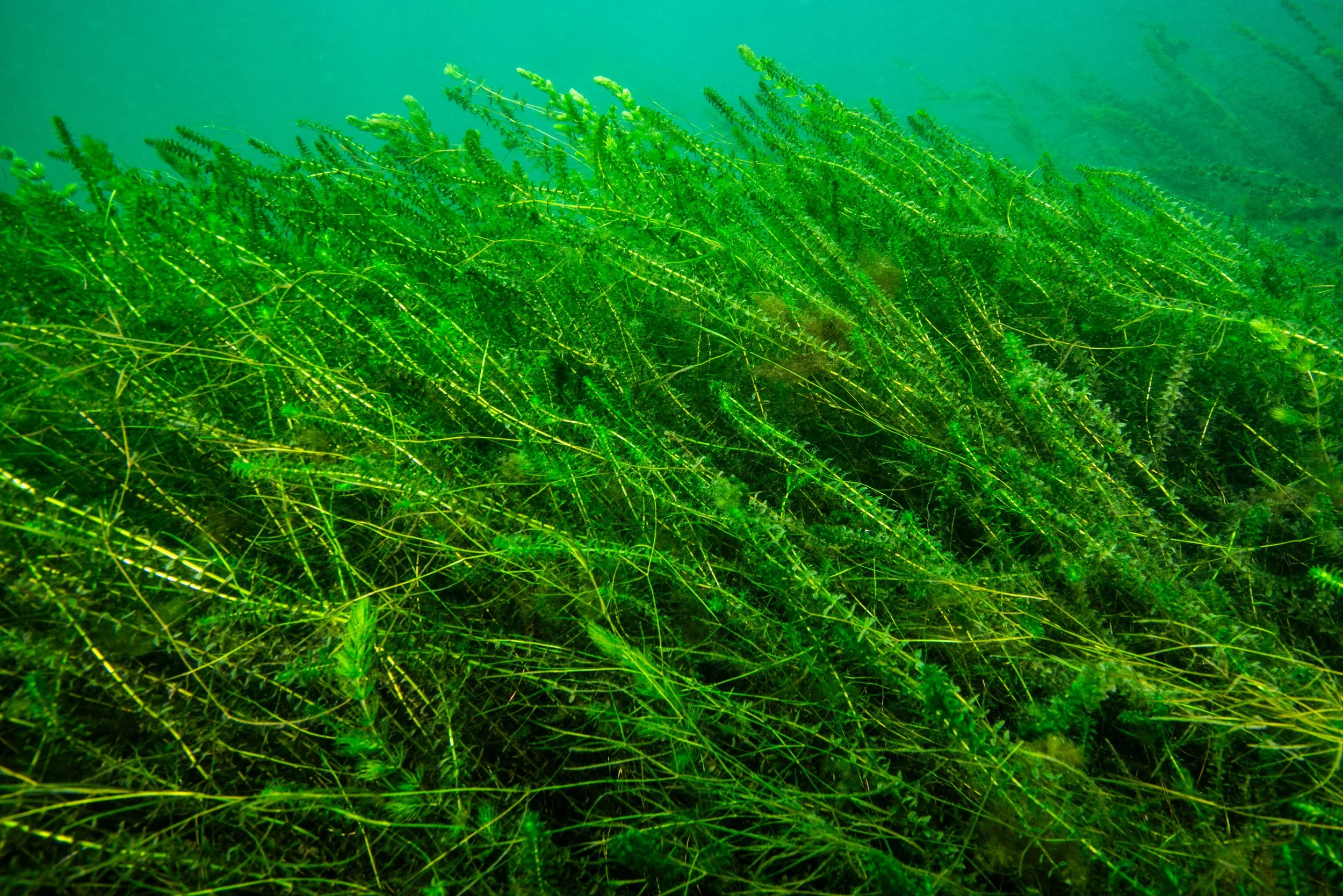
The Quiet Workhorse Beneath the Surface: Common Waterweed
Georges River Land Trust — Living River Species Series
Introduction
Most of the plants we notice along the St. George River grow in plain sight — lining the banks, arching over the water, blooming in the shallows. But some of the watershed's most important botanical work happens out of view, beneath the surface, in the slow-moving coves and ponds where green threads of common waterweed (Elodea canadensis) form dense underwater meadows that few people ever stop to think about. It's not flashy. It doesn't bloom in a way you'd notice from the bank. But pull a stem from the water, hold it in the light, and you'll find something genuinely beautiful — and quietly essential to the life of the river.
Natural History
Common waterweed is a fully submerged aquatic plant native to North America, found from the Maritimes and New England west to the Pacific and south into much of the United States and Mexico. It belongs to the family Hydrocharitaceae and favors still to slow-moving freshwater: ponds, lake coves, sluggish river backwaters, and sheltered bays where light can penetrate to the bottom.
The plant grows in long, branching stems lined with whorls of three small, dark green leaves — each leaf slightly toothed along its edge, translucent when held to the light, oval and barely half an inch long. In good conditions, stems can reach several feet in length and form dense underwater beds that shift gently with the current.
Elodea flowers are tiny and easily overlooked — small white blossoms that float at the water's surface on thread-thin stalks, pollinated at or just below the surface film. Most North American populations consist almost entirely of female plants. The plant reproduces mainly by fragmentation: a broken stem, carried by current or on the feathers of a duck, can root and establish a new colony. It is one of the most successful clonal colonizers in the freshwater world.
The plant is a vigorous photosynthesizer, producing oxygen throughout the day in quantities that are measurable and significant. In the warmer months, tiny streams of oxygen bubbles rise from a healthy Elodea bed in a display that is, if you happen to be watching from underwater, quietly mesmerizing. This productivity is the foundation of everything the plant provides.
Identification Tips
Common waterweed is a fully submerged plant with long, branching stems lined in tight whorls of three small, oval leaves, each barely half an inch long and finely toothed along the edge — visible only by pulling a stem from the water or peering through the surface on a calm day. The leaves are thin enough to see light through and darker green than most other submerged plants in the watershed, with no floating leaves or emergent flowers to help identify it from the surface (its tiny white blooms float nearly flush with the water on thread-like stalks and are easy to miss). Dense beds form dark, waving patches visible from a dock or canoe in shallow, still coves, distinguishing Elodea from the more open-growing pondweeds it's often confused with. On close inspection, tiny streams of oxygen bubbles rising from the leaves on a sunny day are a reliable confirming sign.
Role in the St. George River Watershed
Common waterweed plays several overlapping roles in the lakes, ponds, and slower river reaches of the St. George watershed, and most of them are easy to underestimate.
As a primary producer, it converts sunlight into plant material that feeds the bottom of the food web — aquatic invertebrates graze on it directly, and the invertebrate communities it shelters in turn feed juvenile fish, ducks, herons, and a cascade of other species. The dense structure of an Elodea bed provides refuge for small fish and the young of larger ones, a place to hide from predators and find food in the same square foot of habitat.
For spawning fish — especially species like yellow perch and sunfish that broadcast eggs over vegetation — Elodea beds serve as nurseries, catching and holding eggs until they hatch. Dabbling and diving ducks feed on the plant directly, pulling stems from the bottom on their dives. Turtles rest in and among the beds. Even the water itself benefits: a thriving submerged plant community reduces water turbidity by trapping fine particles and competing with algae for nutrients, helping to keep the water clear.
In the context of watershed health, healthy submerged aquatic vegetation is an indicator of good water quality — the plants need clear water to photosynthesize, and their presence in turn helps keep it that way. It is a relationship that rewards protection.
Seasonal Notes
Common waterweed begins growing actively in late spring as water temperatures warm and day length increases. Through summer, beds can become dense enough to be visible from the surface as dark patches in shallow coves, occasionally tangling in fishing lines or boat propellers. Growth slows in fall, and by late autumn the stems begin to die back. The plant overwinters as dormant fragments and specialized buds called turions — compact, starchy structures that sink to the bottom, survive the cold months, and generate new plants come spring. Even in the depths of a Maine winter, the material for next year's underwater meadow is already waiting.
Fun Fact
If you ever dissected a high school biology class experiment involving a jar of water and a green sprig giving off bubbles under a lamp, that was almost certainly Elodea. Common waterweed has been the go-to demonstration of photosynthesis in classrooms for well over a century because it produces oxygen so reliably and visibly — the bubbles rising from a freshly illuminated stem are real oxygen, manufactured in real time. Somewhere in the St. George watershed right now, the same process is playing out on a much larger scale, breath by silent breath, in coves and shallows most of us will never see.
Want to Learn More?
- Native Plant Trust: Go Botany — Elodea canadensis — Identification details, range maps, and habitat notes for New England.
- Maine DEP: Aquatic Plants of Maine — A practical guide to Maine's native and invasive aquatic plants, with identification help.
- USDA Plants Database — Elodea canadensis — Range maps, taxonomy, and ecological data.
- Maine Volunteer Lake Monitoring Program — How citizen scientists track aquatic plants and water quality across Maine's lakes and ponds.
The Living River blog series is published by St. George Consulting in support of the Georges River Land Trust and the Maine Council of Trout Unlimited. To explore the important work these organizations are doing to conserve and restore Maine's landscapes, visit georgesriver.org and tumaine.org.