White Birches and Humans: A Very Old Friendship
Monday Woods Walk — Week of October 26, 2026
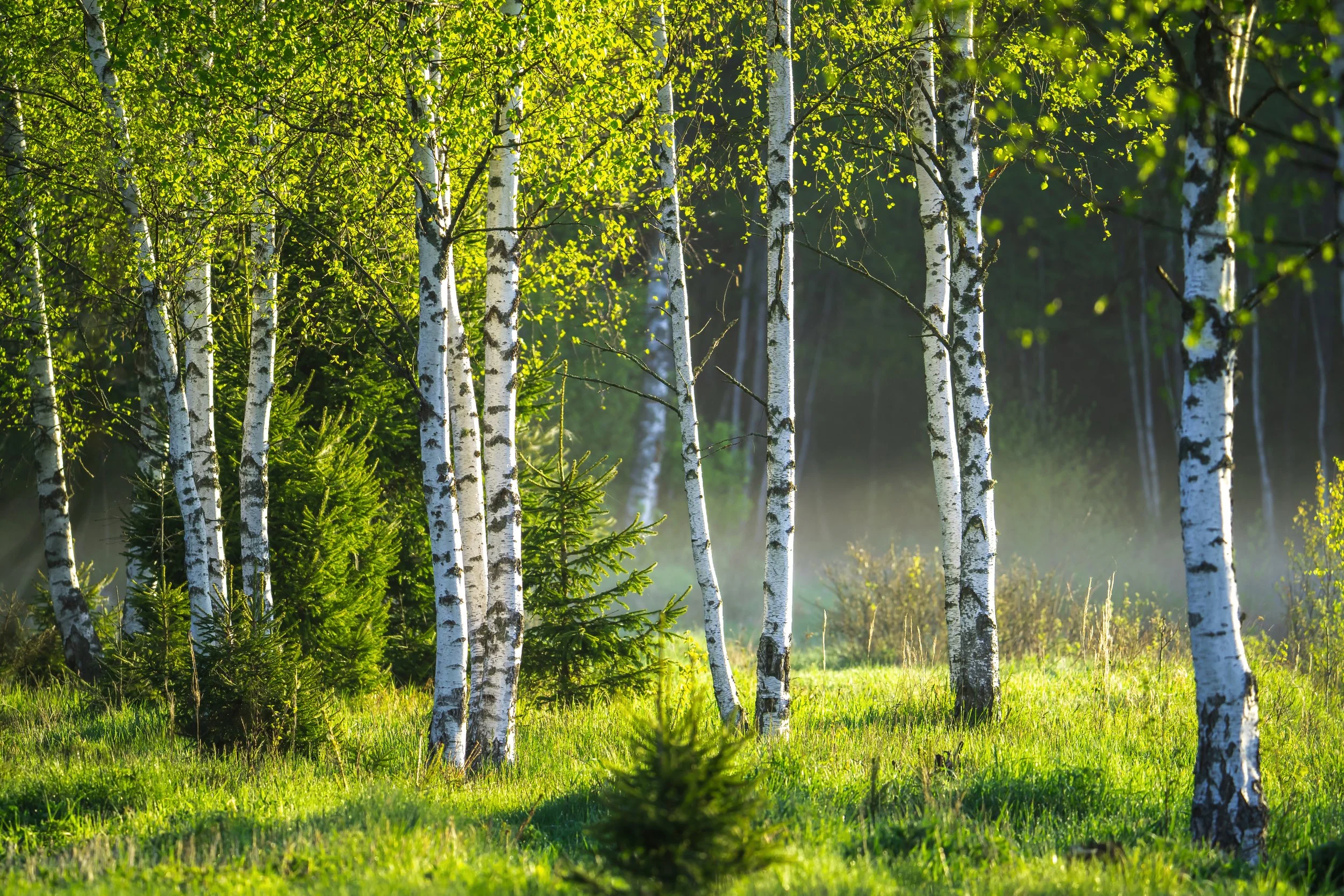
There's one tree in our woods you can spot from a hundred yards away: the white birch, with its bright, papery, peeling bark. This week we talked about the relationship between that tree and a species we usually forget to count as part of nature — us. People and birches have been shaping each other in Maine for thousands of years, and it runs both directions.
Meet the White Birch
The tree we call white birch is officially the paper birch (Betula papyrifera). Here's how to know one:
- Bark: Chalky white, peeling in thin papery curls, with dark lines (called lenticels) running sideways around the trunk. Young birches start out reddish-brown and turn white as they grow.
- Leaves: Oval, pointed, toothed, about the size of a playing card. Bright yellow in fall.
- Seeds: Tiny and winged, packed into dangling "catkins." One tree can release millions, and the wind carries them far.
Paper birch is a pioneer species. It can't handle deep shade, but it's one of the first trees to pop up after a fire, a storm, or a clear-cut lets in sunlight. It grows fast, lives a short life for a tree (60 to 80 years), and then gets shaded out by slower trees like spruce and maple. Remember that — it matters.
Learn more: Paper Birch — Forest Trees of Maine (Maine Forest Service)
Meet the Humans
You know who we are. But remember: people have lived in Maine for at least 12,000 years. The Wabanaki — including the Penobscot and Passamaquoddy, who still live here today — were here long before any European ship appeared, and the paper birch was one of the most important plants in their lives.
The Relationship: What Humans Get From Birches
The secret is the bark. Birch bark is tough, flexible, waterproof, and full of natural oils that keep it from rotting. People figured out long ago that this is an amazing material.
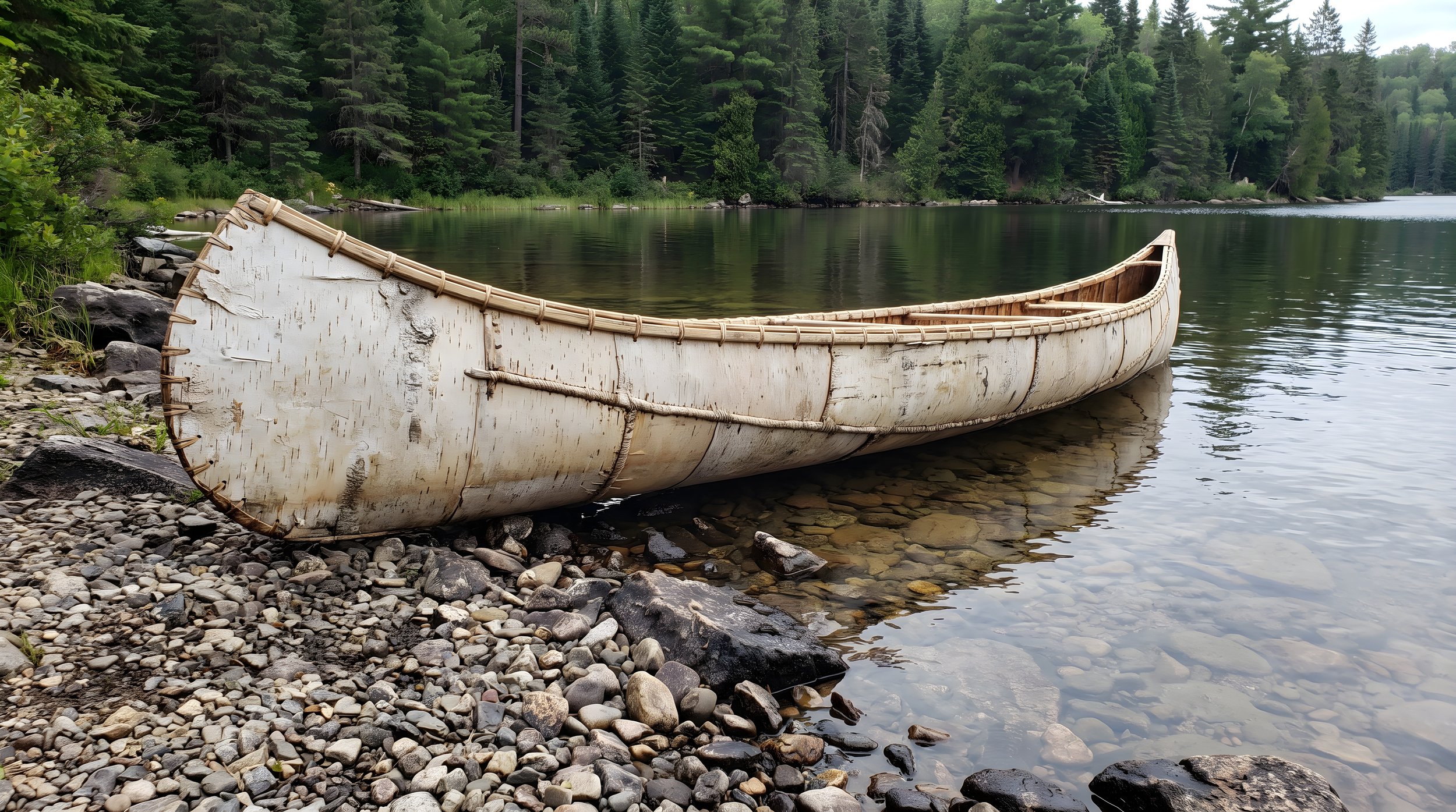
- Canoes. The Wabanaki built birchbark canoes — light enough for one person to carry, tough enough for rivers and ocean, and made entirely from the forest: birch bark skin, cedar frame, spruce-root stitching, spruce gum to seal the seams. Historians call it one of the great inventions in human history, and European fur traders copied it as soon as they saw it. Wabanaki builders still make them today.
- Containers. Folded and stitched bark made baskets, buckets, and even cooking pots. (You can boil water in a birch bark pot — it won't burn as long as there's water inside.)
- Shelter. Sheets of bark covered wigwam frames, shedding rain like shingles.
- Fire. The oils make birch bark burn hot and fast even when wet. A few curls are still the best fire starter in the Maine woods.
- Today. Paper birch wood becomes popsicle sticks, toothpicks, spoons, and firewood, and the sap can be boiled into syrup, like maple.
Learn more: Legacy of Penobscot Canoes — Peabody Museum, Harvard
The Relationship: What Birches Get From Humans
Here's the surprising half. Paper birch is a pioneer species that needs open, sunny ground — and humans are very good at making open, sunny ground.
For thousands of years, people in Maine cleared land with fire, stone tools, and later axes and saws. Every clearing, abandoned farm field, logged hillside, and old burn was an invitation for birch seeds blowing in on the wind. Many of the birches along roads and field edges in St. George are there because people cleared something fifty or a hundred years ago. We've been planting birches without meaning to, the same way squirrels plant oaks.
So: humans disturb the forest, birches move in, humans use the birches. Then the birches grow old, spruce and maple take over, and the cycle waits for the next disturbance.
Learn more: Paper Birch: Shining Beauty — Arbor Day Foundation
One Rule From Our Walk
Don't peel bark off a living birch. The bark is the tree's skin; stripping a ring around the trunk can kill it. Fallen branches and dead trees give you all the fire starter you need — Wabanaki harvesters have always known to take only what the tree can spare.
Watch For on Our Next Walk
- Find the youngest birch you can. Is its bark still reddish-brown?
- Notice where birches grow. Field edges? Roadsides? Old stone walls? What does that say about what people did there?
- Find a fallen birch. Has the bark outlasted the wood inside it?
- Find the lenticels on a trunk. Those dark lines are how the tree breathes.
Big Idea
Humans and white birches have a two-way relationship. We take bark, wood, and sap from birches; birches take the open, sunny ground we create. Neither one planned it — but walk past any old field in St. George, and you'll see it growing right in front of you.
See you Monday.