Small Fish and Eelgrass: The Nursery Under the Water
Monday Woods Walk — Week of October 26, 2026
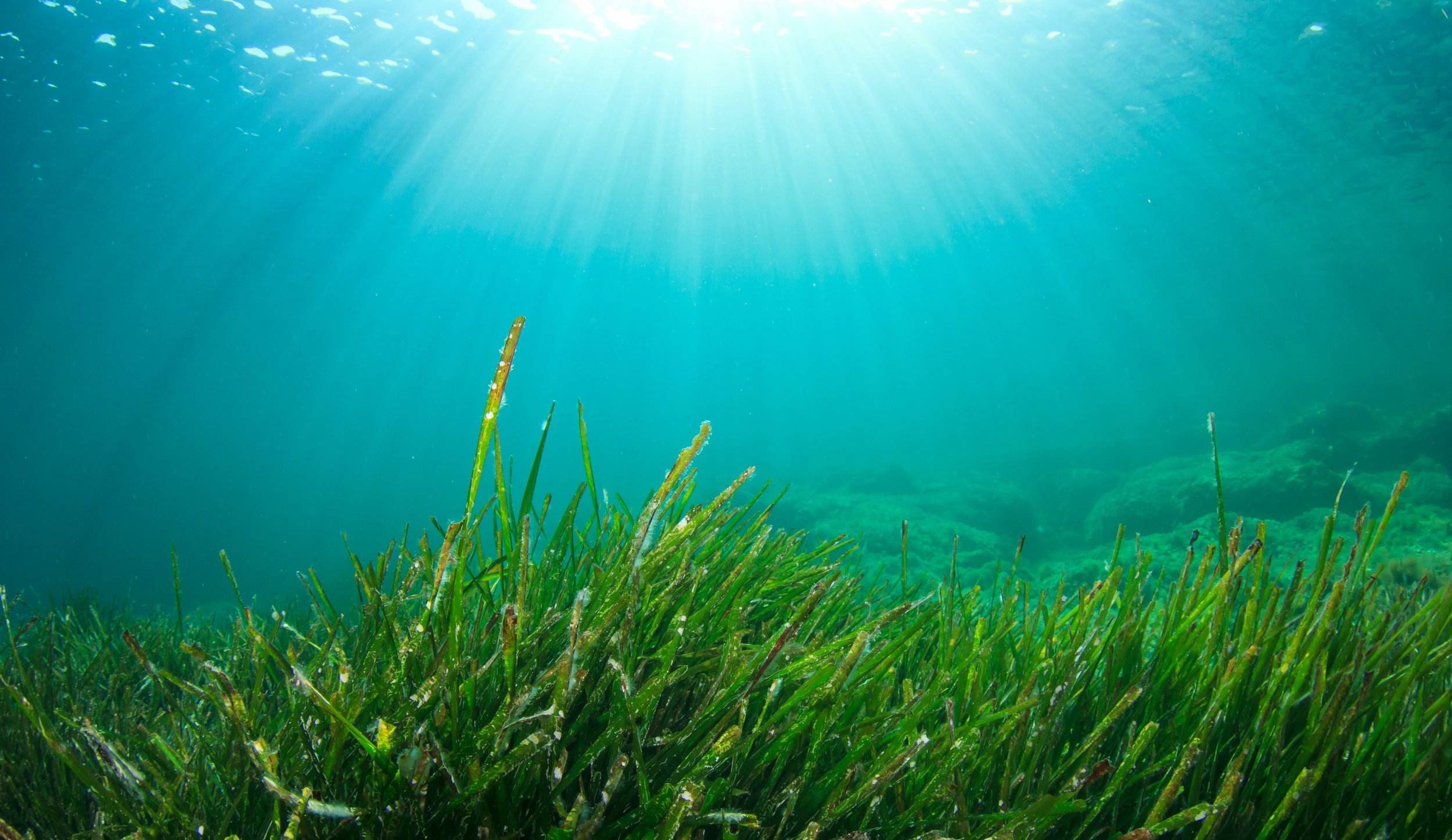
Look down into the shallows at low tide and in some spots you'll see long, ribbon-shaped green leaves swaying like grass in a field. That's eelgrass, one of the most important places on the whole coast — not because of the grass itself, but because of who's hiding in it.
This week we talked about the relationship between eelgrass and the small fish that live in it.
Meet Eelgrass
Eelgrass (Zostera marina) is not seaweed. Seaweeds are algae; eelgrass is a true plant, with roots, flowers, and seeds, like a lawn or a cornfield. Its ancestors lived on land and moved back into the sea long ago. It still makes food from sunlight, which is why it only grows in shallow, clear water where light reaches the bottom.
- Leaves: Bright green, flat, ribbon-like, about as wide as a shoelace and up to three feet long.
- Roots: Underground stems called rhizomes knit into a mat that holds the mud in place.
- Where: Sheltered coves and harbors with muddy or sandy bottoms, from the low-tide line down to about 15 feet. It grows all along the Maine coast, including St. George's harbors.
A big patch of eelgrass is called a meadow, and a healthy one is as busy as any field on land.
Learn more: Maine Eelgrass — Maine Department of Marine Resources
Meet the Small Fish
Eelgrass meadows are full of fish, but most are tiny — and many are babies. That's the key to this relationship. Some you might meet:
- Pipefish. A straw-thin cousin of the seahorse that hangs vertically among the blades and is almost impossible to see. The males carry the eggs.
- Sticklebacks. Finger-length fish with sharp spines on their backs. They build nests out of plant bits glued together with a sticky thread from their own bodies.
- Mummichogs and silversides. Small, silvery schooling fish that zip through the shallows by the hundreds.
- Young cod, pollock, and winter flounder. The adults live far out in the Gulf of Maine, where fishermen catch them. But when they're an inch or two long, many spend their first summer hiding in eelgrass.
The Relationship: A Nursery and Its Babies
What the fish get from the eelgrass. Three things: a hiding place, a pantry, and a calm spot.
A hiding place. A baby fish in open water is a snack for anything bigger — striped bass, cormorants, even crabs. Inside a thick meadow, a fish can slip between the blades and vanish. The pipefish goes further: it looks exactly like a blade of eelgrass.
A pantry. The blades get coated with a fuzz of tiny algae and animals, and the meadow floor crawls with small shrimp, snails, and worms. For a small fish, it's an all-you-can-eat buffet.
A calm spot. The leaves slow waves and currents, so young fish don't get tossed around.
Scientists call eelgrass a nursery habitat because so many fish spend their childhood there before heading to deeper water as adults. The cod on your dinner plate may have started life in a patch of eelgrass in a Maine cove.
What the eelgrass gets from the fish. This half is quieter but real. Animals in the meadow produce waste, which fertilizes the plants. Small fish eat the snails that nibble eelgrass and the algae that coats the blades, keeping the leaves clean so sunlight can reach them. A meadow with no animals would be a sicker meadow.
Learn more: Secret Gardens under the Sea — Frontiers for Young Minds — a science article written for students about why seagrass meadows matter
Why This Matters
Eelgrass is in trouble in many places. It needs clear water, and when too much mud or fertilizer runs off the land, the water gets cloudy, light can't reach the bottom, and the meadow dies. Boat propellers, moorings, and dredging tear it up, too. When the eelgrass goes, the nursery goes with it.
That's why Maine scientists now map eelgrass along the whole coast every few years, to see where it's growing and where it's disappearing.
Watch For on Our Next Walk
- Find the meadow. At low tide, look along the sheltered side of the harbor for ribbon-shaped leaves.
- Look for washed-up eelgrass on the beach, tangled in with seaweed. Can you tell them apart?
- Freeze and watch. Stand still over the shallows for one full minute. What moves?
- Look uphill. Roads, lawns, forest? What might run off into the water when it rains?
Big Idea
Eelgrass and small fish need each other. The meadow gives young fish a safe place to grow up, and the fish help keep the meadow healthy. And because so many of the big fish in the Gulf of Maine started small in a patch of eelgrass, a quiet cove in St. George is connected to the whole ocean.
See you Monday.