October 19, 2026
Red Squirrels and Red Oaks: A Noisy Partnership
Monday Woods Walk — Week of October 26, 2026
If you've ever been scolded by a red squirrel, you know the sound: a rattling chk-chk-chk-chkkkkk from up in the branches, aimed right at you. We heard plenty of it this week — and we also saw why the squirrels were so busy: acorns, everywhere.
The squirrel and the acorn are connected in a relationship thousands of years old. Let's meet both, then see how they depend on each other.
Meet the Red Squirrel
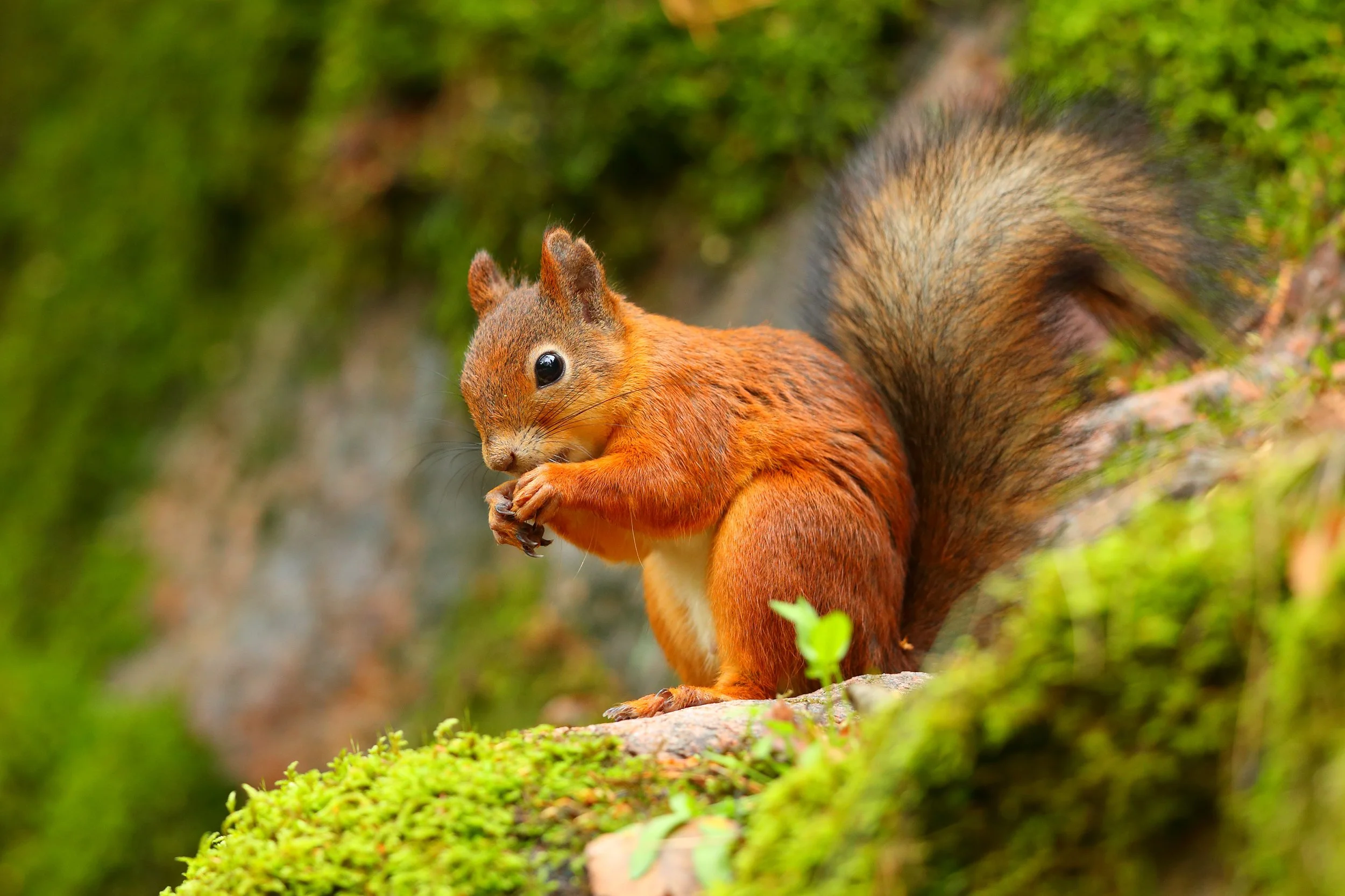
The American red squirrel (Tamiasciurus hudsonicus) is the small, feisty squirrel with rusty-red fur, a white belly, and a white ring around each eye. It's much smaller than a gray squirrel — about the length of a ruler, nose to tail.
- Loud and territorial. A red squirrel claims a patch of forest and defends it against every other red squirrel — and against you. That chattering means: "MY tree. Keep moving."
- Active all winter. Red squirrels don't hibernate; they tunnel under the snow to reach their food.
- Serious collectors. Starting in late summer, they gather cones, mushrooms (which they dry on branches!), and acorns, piling much of it in one big storage heap called a midden.
Look for this: A mound of chewed-up cone scales near a spruce or pine. That's a red squirrel's "kitchen table."
Learn more: Red squirrel — BioKIDS (University of Michigan)
Meet the Northern Red Oak
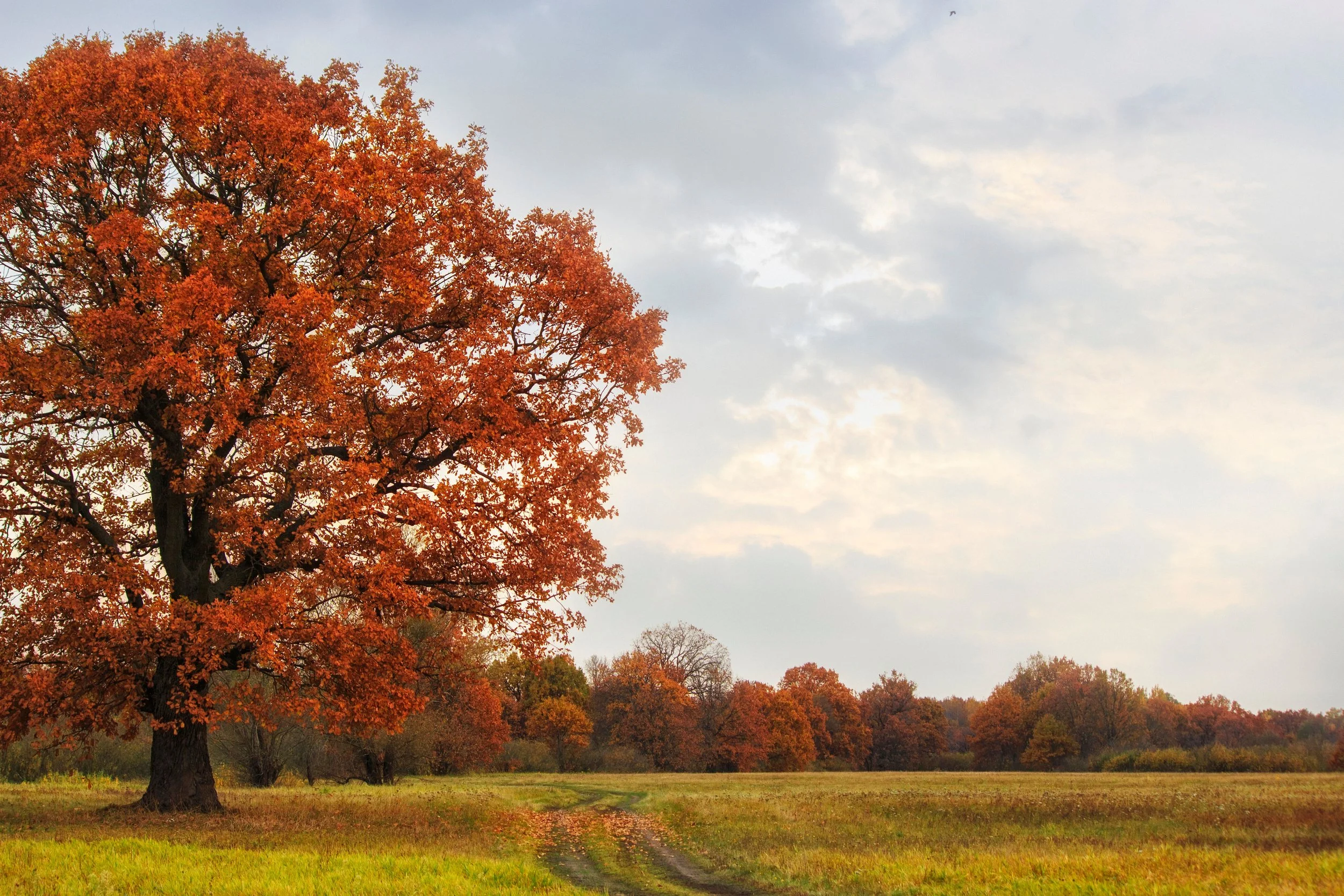
The northern red oak (Quercus rubra) is the most common oak in Maine, and it grows all over St. George.
- Leaves: Big, with 7 to 11 pointy lobes, each tipped with a tiny bristle. (Rounded lobes, no bristle? That's a white oak.)
- Bark: Dark gray with long, flat, shiny ridges like ski tracks running up the trunk.
- Acorns: About an inch long, with a shallow cap like a little beret. Strange fact: a red oak acorn takes two years to ripen.
A big red oak can drop more than a thousand acorns in one fall — but not every year. Some years oaks make almost nothing; then suddenly every oak in the area produces a gigantic crop. Scientists call these mast years. Remember that.
Learn more: Northern Red Oak — Forest Trees of Maine (Maine Forest Service)
The Relationship: Who's Using Whom?
At first this looks simple: the oak makes acorns, the squirrel eats them. Squirrel wins, tree loses. But it's more interesting than that.
What the squirrel gets. An acorn is a packed lunch — fat, protein, and carbohydrates, exactly the fuel a small animal needs to get through a Maine winter awake. A well-fed squirrel is more likely to reach spring and raise more babies.
What the oak gets. An acorn that falls straight down lands in its parent's shade, where it will probably never get enough light to grow. For an oak to spread, its acorns need to move — and acorns can't walk. So the oak wraps its seed in a tasty package and lets animals carry it off. Squirrels bury some acorns, then forget where they put them. A forgotten, buried acorn is hidden, moist, and covered with soil — a perfect spot. Come spring, it sprouts. The squirrel planted a tree without meaning to. That's why scientists call squirrels seed dispersers as well as seed predators.
A twist. Not all squirrels are equally good planters. Gray squirrels bury acorns one at a time all over the forest — great for oaks. Red squirrels prefer to pile food in one midden, where acorns get eaten instead of sprouting. So our red squirrel is more taker than planter — but it still buries a few, and over many years those add up to new trees.
Why mast years matter. In a lean year, squirrel numbers drop. Then the oaks produce a huge crop all at once — far more than the smaller squirrel population can eat. The leftovers get buried and forgotten, and lots of them sprout. The oak starves the squirrels, then floods them. It's a slow-motion contest that never ends.
Learn more: Squirrels plant the seeds of future forests — Purdue University
Watch For on Our Next Walk
- Count the lobes on a fallen oak leaf. Red oak or white?
- Find a midden near a spruce or pine.
- Check the acorns. Any chewed open? Any with tiny round holes? (Those are from acorn weevils — another creature that depends on the oak.)
- Listen. When a red squirrel scolds you, find its tree. That's its territory.
Big Idea
The red squirrel and the red oak are each using the other. The squirrel takes the oak's seeds for food; the oak uses the squirrel's forgetfulness to plant its children. Neither is a good guy or a bad guy — just two neighbors shaping each other, right here in the woods behind the school.
See you Monday.