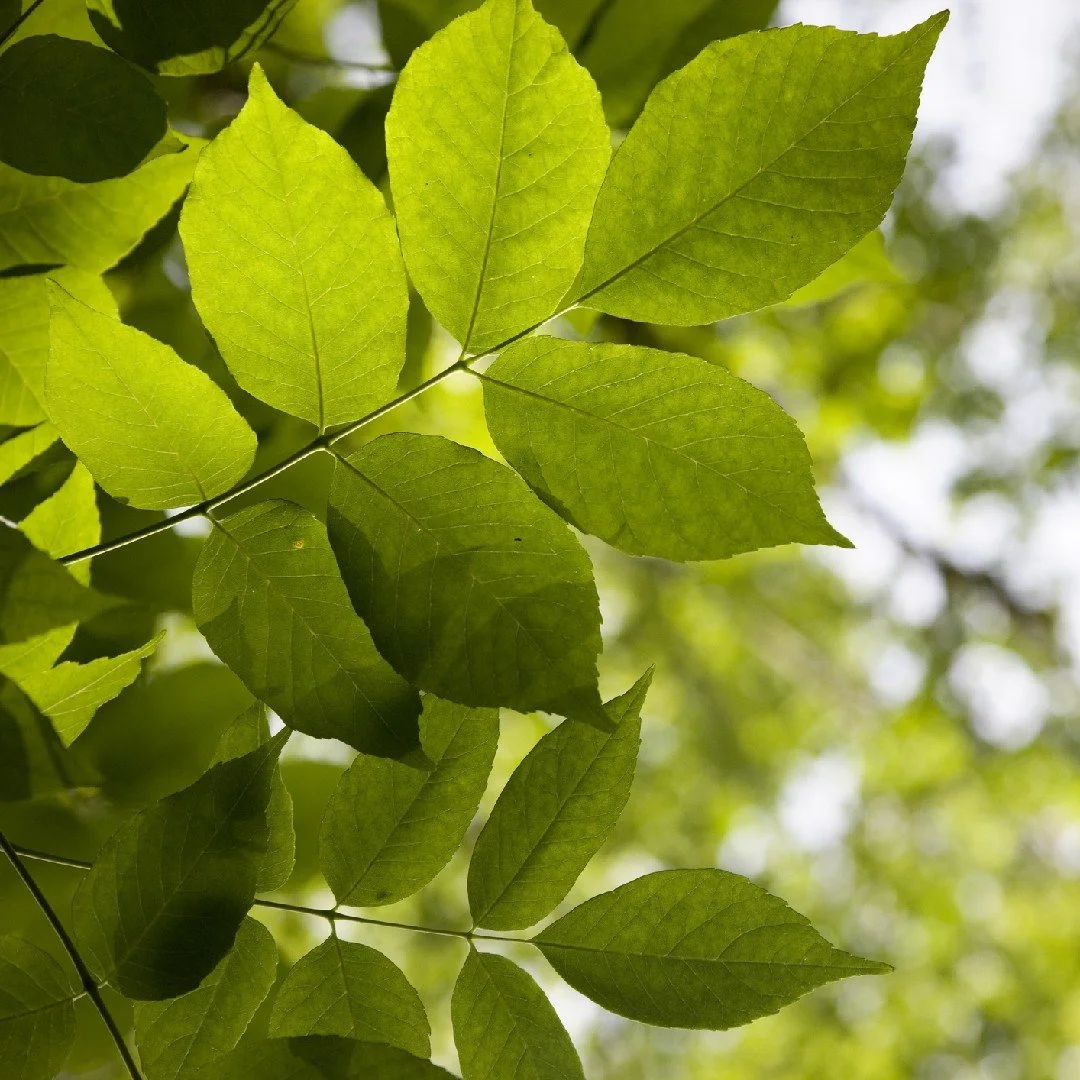
White ash leaves
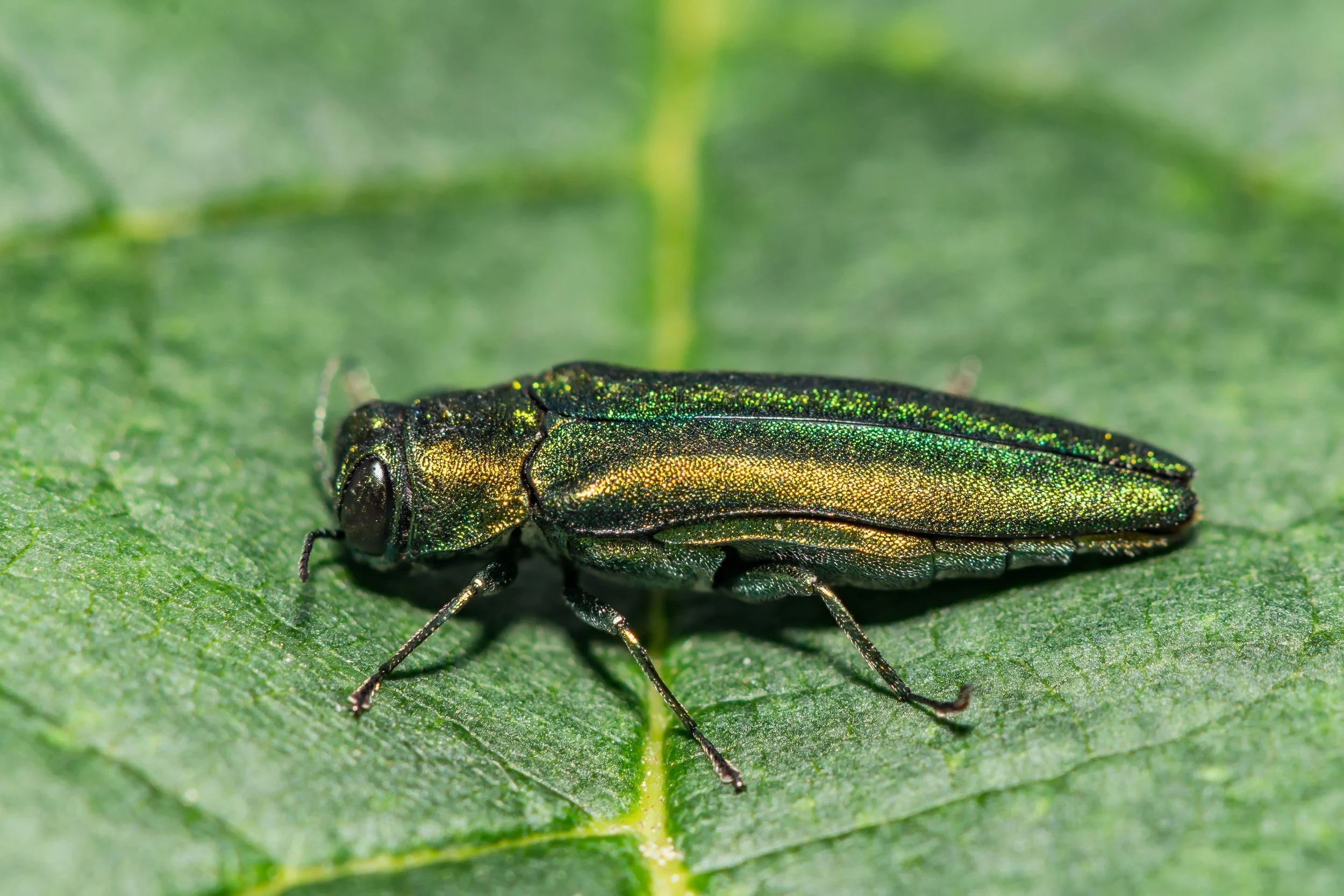
Emerald Ash Borer
The Tree and the Tiny Green Beetle
Could an insect shorter than your thumbnail bring down a tree that towers 70 feet tall? On our walk this week, we talked about a relationship where that's exactly what happens. It's the story of the white ash tree and the emerald ash borer.
Meet the White Ash
White ash is a native tree found all across Maine. It can grow 60 to 70 feet tall. Look for these clues:
- Opposite branches: Branches and buds grow in pairs, straight across from each other.
- Compound leaves: Each leaf is made of several smaller leaflets, usually about seven.
- Diamond bark: The bark on older trees has ridges that crisscross in a diamond pattern, a bit like a woven basket.
- Winged seeds: Clusters of seeds shaped like tiny canoe paddles hang from the branches and often stay on into late fall.
White ash is also a great neighbor in the forest. Deer eat its leaves, rabbits and porcupines chew the bark of young trees, and birds and small mammals eat its seeds. Woodpeckers, wood ducks, and owls nest in holes in its trunk.
People love ash, too. Its strong, springy wood makes tool handles, canoe paddles, and baseball bats. That famous "crack of the bat" often comes from white ash!
Meet the Emerald Ash Borer
The emerald ash borer is a beetle with a shiny, metallic green body. It's shaped like a bullet and only about half an inch long. Scientists often call it EAB for short.
EAB comes from Asia. It probably traveled to North America by accident, hidden inside wooden packing material on ships or planes. It was discovered in Michigan in 2002 and was first found in Maine in 2018.
That makes EAB an invasive species: a living thing that was brought to a new place, where it spreads and causes harm.
How the Relationship Works
Here's the surprising part: the adult beetles nibble on ash leaves, but that does very little damage. The trouble comes from their babies.
- Eggs: In summer, a female lays her eggs in cracks in the bark.
- Larvae: The eggs hatch into pale, worm-like larvae that chew through the bark.
- Tunnels: The larvae eat the inner bark, carving winding S-shaped tunnels.
- Exit: The larvae change into adults, then chew out through the bark, leaving a tiny D-shaped hole.
A tree's inner bark works like a system of pipes, carrying water and food up and down the trunk. When enough tunnels cut through those pipes, the top of the tree starts to die. An ash tree generally dies within three to five years of being attacked.
So one species benefits and the other is harmed. The beetle gets food and a safe place to grow up, and the tree gets only damage. Scientists use the word parasitism for this kind of relationship, though many parasites don't kill their hosts. EAB usually does.
Why Is It So Deadly Here?
In Asia, ash trees and EAB have lived together for a very long time. Those trees have natural defenses against the beetle, and there are predators that help keep it under control.
North American ash trees never had to deal with this beetle, so they lack those defenses. EAB has now killed hundreds of millions of ash trees in North America.
Who Is Fighting Back?
Other relationships are starting to form:
- Woodpeckers flake away bark to reach the larvae, leaving pale patches that foresters call "blonding." Audubon reports that they typically kill about 40 percent of the EAB in an area. That doesn't save the trees, but it helps.
- Tiny wasps from EAB's home range are being released by scientists. These wasps attack EAB eggs and larvae.
- People can keep firewood local, since moving infested firewood is believed to be the main way EAB spreads.
Be a Forest Detective!
On our next walk, let's look for ash trees and these clues:
- Can you spot branches growing in opposite pairs?
- Can you find diamond-patterned bark, or winged seeds still hanging on?
- Do you see any pale patches of "blonding," or any tiny D-shaped holes?
Sick ash trees can become brittle, so we'll look from a safe distance and never stand under one that's dying.
Something to think about: The beetle isn't trying to be a villain. It's just being a beetle. What do you think makes this relationship so harmful here when it's so much more balanced in Asia?
Want to Learn More?
- Is It an Ash Tree? from the Maine Forest Service
- Emerald Ash Borer and Lookalikes, to see the beetle up close
- Signs of Emerald Ash Borer, with what to look for on a tree