Water Lilies
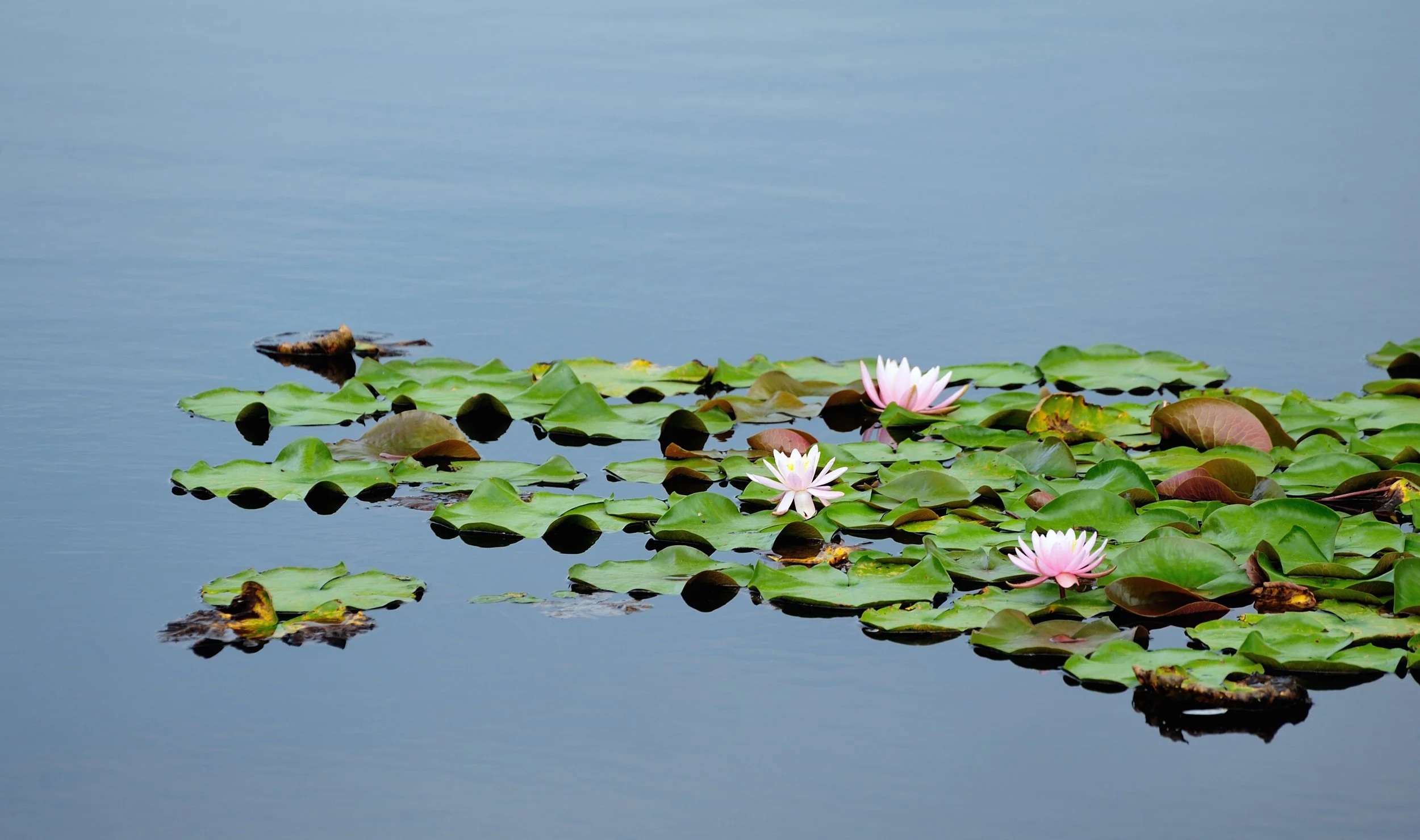
A Floating World: Water Lilies of the St. George Watershed
Georges River Land Trust — Living River Species Series
Introduction
On a still July morning, with mist sitting low over a quiet cove of the St. George River, there is nothing quite like a bed of water lilies in bloom. The white-petaled flowers of the fragrant water lily (Nymphaea odorata) open with the sun and close again by early afternoon, and the broad, waxy pads spread across the surface in overlapping circles, each one a small world unto itself. Alongside them in the shallower, murkier margins, the yellow pond lily (Nuphar variegata) holds its globe-shaped flowers just above the water on stout stems, stouter-leaved and less delicate but equally native and equally essential. Together, these two plants form one of the most recognizable and ecologically productive habitats in the watershed.
Natural History
Both species are rooted in the mud of pond and river bottoms, sending up long, flexible stems to floating leaves and flowers above. The fragrant water lily is the showier of the two — its flowers can reach five inches across, with layers of white petals surrounding a yellow center, and on a calm morning they carry a faint, sweet scent. The yellow pond lily is tougher and more tolerant of disturbance, with heart-shaped leaves that often stand above the surface rather than floating, and flowers that look more like small yellow globes than open blossoms.
The pollination strategy of the fragrant water lily is worth pausing on. The flowers are pollinated primarily by beetles, not bees. On its first day open, a flower is in its female phase, luring beetles into a central cup of sweet liquid. By the second day it shifts to male, coating visitors with fresh pollen to carry elsewhere. Beetles that linger overnight are trapped when the flower closes at dusk — a reliable, if unglamorous, way to ensure cross-pollination.
Both species spread primarily through rhizomes — thick, starchy underground stems anchored in the sediment — which can extend many feet and form extensive, long-lived colonies.
Identification Tips
The two native water lilies are easy to tell apart at a glance. Fragrant water lily has round, waxy, floating pads with a single slit from edge to center, and showy white, many-petaled flowers with a yellow center that open in morning sun and close by afternoon. Yellow pond lily has thicker, more heart-shaped leaves that often stand slightly above the water rather than lying flat, and small, globe-shaped yellow flowers that never fully open into broad petals. Both root in mud and send a single leaf or flower up on its own stem, unlike floating-leaved pondweeds, which branch and cluster their leaves along a stem. If you're unsure which lily you're looking at, the flower shape settles it — broad, layered petals mean fragrant water lily, while a tight yellow ball means pond lily.
Role in the St. George River Watershed
Water lily beds are among the most productive microhabitats in the watershed, functioning simultaneously as shelter, hunting ground, basking platform, and food source for a remarkable range of species.
Painted turtles haul out onto lily pads to bask, their dark shells warming in the morning sun. Bullfrogs and green frogs rest on the pads at the water's edge, ready to leap at passing insects. Pickerel and largemouth bass hold in the shade beneath the canopy of pads, ambushing prey from cover. Great blue herons wade the margins of lily beds and stand motionless among the stems.
The pads themselves are food and habitat. Waterlily leaf beetles (Galerucella nymphaeae) feed on the upper surface of the leaves, leaving characteristic scalloped scars. Dragonflies and damselflies perch on upright stems and newly opened flowers. Water striders hunt across the spaces between pads. Beneath the surface, the rhizomes are a crucial food source for beavers, which dive to cut and carry them back to their lodges, and for muskrats, which feed on rhizomes and young stems throughout the growing season. Wood ducks eat the seeds.
The floating pads do important physical work too — shading the water to slow algae growth, and in exposed coves dampening wave energy to reduce bank erosion and keep the water clearer downstream.
Seasonal Notes
Lily pads begin surfacing in May, sometimes as early as late April in sheltered coves. Flowers open from late June through August, with peak bloom in July. The pads remain through September and into October, gradually yellowing and breaking down as water temperatures fall. By November the surface is clear, though the rhizomes overwinter in the mud and will send up new growth when the water warms again the following spring.
Fun Fact
The rhizomes of both native water lilies were an important food source for the Wabanaki peoples of Maine, eaten raw, roasted, or ground into flour. The yellow pond lily in particular produces large, starchy rhizomes that were harvested in late summer and fall. A plant that feeds beavers, muskrats, wood ducks, and people has earned its place in the watershed.
Want to Learn More?
- USDA Plants — Nymphaea odorata — Range maps and botanical profile for fragrant water lily.
- iNaturalist — Water Lilies in Maine — Community sightings and photographs from New England observers.
- Maine Natural Areas Program — Aquatic Communities — How water lily beds fit into Maine's aquatic plant community classification.
- Wabanaki Studies — University of Maine — Resources on Wabanaki culture and traditional ecological knowledge in Maine.
The Living River blog series is published by St. George Consulting in support of the Georges River Land Trust and the Maine Council of Trout Unlimited. To explore the important work these organizations are doing to conserve and restore Maine's landscapes, visit georgesriver.org and tumaine.org.