The Acorn Planter: Blue Jay
Georges River Land Trust — Living River Species Series
Introduction
Walk under the oaks along the St. George River this week and you'll likely hear one before you see it: a loud, jeering call, or maybe the scream of a hawk that turns out to be no hawk at all. Then a flash of brilliant blue sails across the trail, its throat stuffed with acorns. The blue jay (Cyanocitta cristata) is noisy, social and very smart. Right now, in the heart of acorn season, it's doing some of the most important work of its year: planting the next generation of oaks.
Natural History
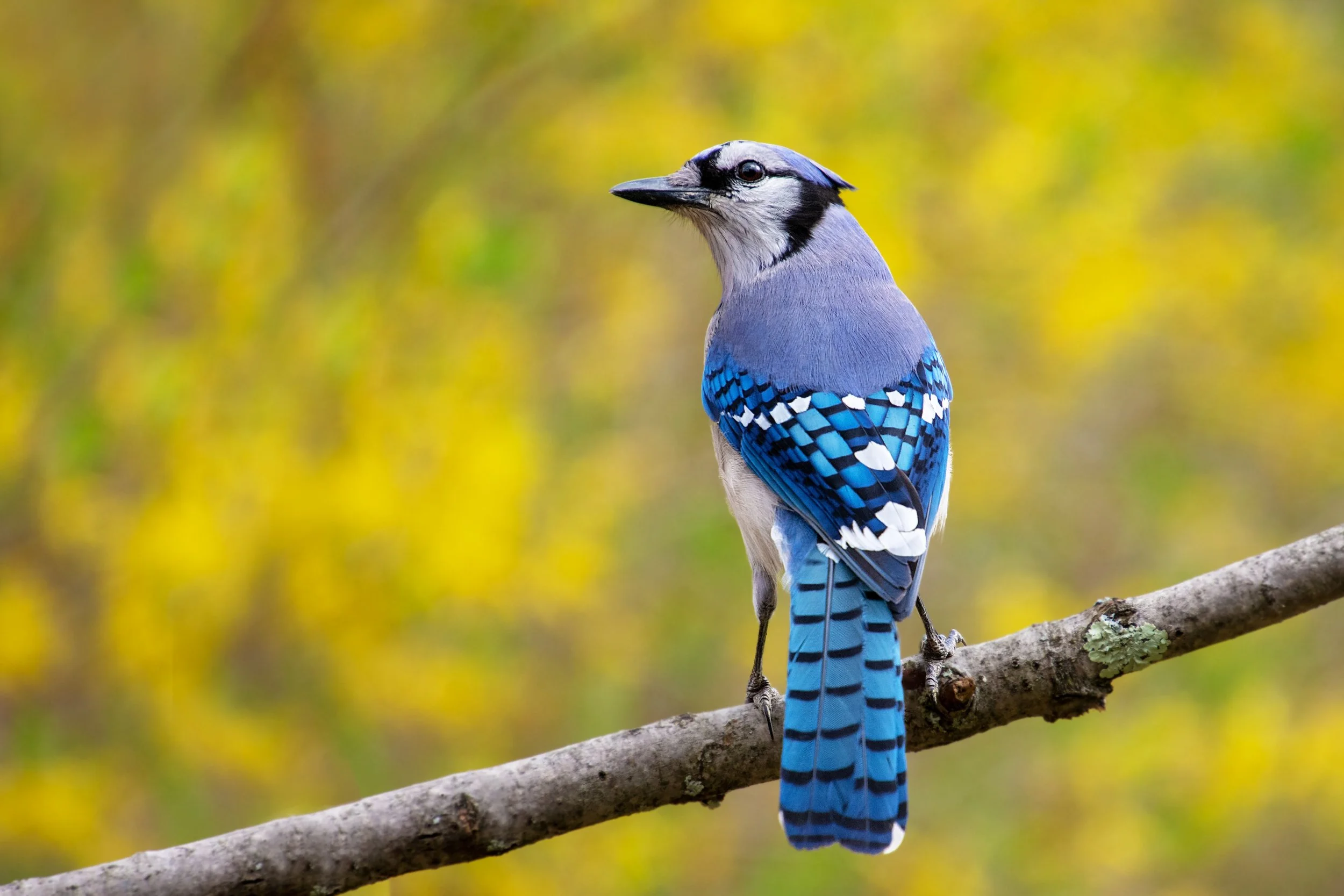
Blue jays are large songbirds, 9 to 12 inches long, somewhere between a robin and a crow in size. Look for a crest, bright blue wings and tail, a black necklace, white wing bars, and white corners on the tail. Males are slightly larger than females.
That famous blue isn't pigment at all. Jay feathers contain no blue pigment. The color comes from tiny structures inside the feathers that reflect light in a way our eyes see as blue, a phenomenon called structural color.
Jays are omnivores. Up to three-quarters of their yearly diet is plant food such as acorns, beechnuts, seeds and berries. The rest includes caterpillars, beetles, grasshoppers and spiders, and now and then an egg or nestling from another bird's nest.
Both parents build a bulky cup of twigs, grass and bark, usually 8 to 30 feet up in a tree. Jays are quiet and inconspicuous near the nest, but they call loudly and attack if a predator threatens it.
Role in the St. George River Watershed
Blue jays are among the watershed's most important seed dispersers. In fall they gather acorns and beechnuts, carry them away, and store them in holes in the ground to eat later. In a classic Virginia study, a group of about 50 jays moved and cached roughly 150,000 acorns from just 11 oak trees in a single season. A jay could carry about seven acorns per trip, packed into its expandable throat with one more in its bill, and flew up to five miles to its own territory.
Scientists credit blue jays with helping oak forests spread north after the last glaciers retreated, and they're still planting oaks today. Some of the red oaks and white oaks sprouting in old fields and forest openings along the St. George may have started as a jay's forgotten snack.
A Web of Relationships
- Plants: Oaks and American beech are the jay's most important partners: the trees feed the jays, and the jays plant the trees.
- Birds: Jays are expert mimics of red-shouldered hawks and other raptors. One leading explanation is that the fake hawk calls scare other jays and birds away from a good acorn tree. Their fondness for eggs makes them occasional nest predators.
- Insects: Caterpillars, beetles and grasshoppers are the jay's main insect foods.
Seasonal Notes
Right now (late October and November): It's peak caching time. Watch jays fly back and forth from oaks with bulging throats. Listen for hawk calls coming from oak trees: in autumn, when acorns draw many jays together, that "hawk" is often a jay. Jays also visit feeders for peanuts, sunflower seeds and suet.
Winter: In years when Maine's oaks produce lots of acorns, many jays stay through autumn and winter. In other years, some move south, and thousands may migrate in daytime flocks.
Spring: Courtship may include aerial chases before pairs settle in to nest.
Summer: Both parents feed the nestlings, which leave the nest 17 to 21 days after hatching.
Fun Fact
Blue jays may be better gardeners than chance. In one study, beechnuts cached by jays sprouted 88 percent of the time, compared with just 10 percent for nuts collected at random from the same trees.
Want to Learn More?
- Cornell Lab All About Birds: Blue Jay: Identification, sounds and the jay's role in spreading oaks.
- Audubon Field Guide: Blue Jay: Diet, nesting and migration details.
- Maine Natural History: Jay Mimicry: A Maine naturalist on jays imitating red-shouldered hawks in autumn.
- Northern Woodlands: Blue Jay Blues: The science of why jays look blue.
- Loyola University: Blue Jay Acorn Planters: How jays cache acorns and plant oak forests.
The Living River blog series is published by St. George Consulting in support of the Georges River Land Trust and the Maine Council of Trout Unlimited. To explore the important work these organizations are doing to conserve and restore Maine's landscapes, visit georgesriver.org and tumaine.org.