Alewives
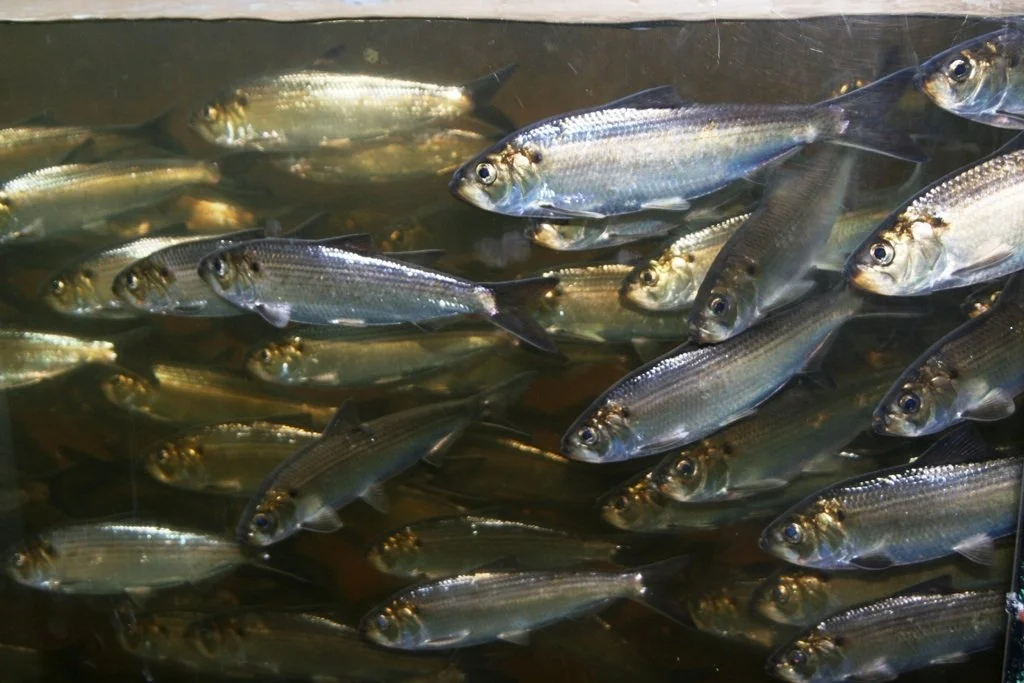
Image by John Burrows
The River's Silver Messenger: The Alewife
St. George Consulting — Living River Series
Introduction
Every spring, one of the great spectacles of the natural world happens quietly in Maine's coastal rivers — and most people drive right past it. Alewives (Alosa pseudoharengus) are small, silvery fish, no bigger than your hand, that spend most of their lives in the open ocean and then return in great, shimmering schools to the freshwater streams where they were born. In Maine, they are called "river herring," and their arrival each May is as sure a sign of spring as the peepers or the returning ospreys. For the St. George River watershed, alewives are not just a seasonal visitor — they are a keystone species, a thread that connects ocean and forest, predator and prey, past and present.
Natural History
Alewives are anadromous fish, meaning they live in saltwater but spawn in freshwater — a life strategy they share with Atlantic salmon and sea-run brook trout. Adults typically spend two to five years at sea, growing on a diet of zooplankton, before an irresistible biological signal draws them back to their birth river. They navigate using the unique chemical signature of their home stream, a sense of place encoded in their biology at hatching.
Spawning occurs in slow-moving water — ponds, lake margins, and sluggish stream sections — where females release hundreds of thousands of eggs. The adults, exhausted and battered, drift back downstream to the sea. The eggs hatch quickly, and by late summer the young alewives — called "juveniles" — make their own first journey to the ocean, completing a cycle that has played out on this coast for thousands of years.
Role in the St. George River Watershed
Few species matter as much to as many others. When alewives run, nearly every predator in the watershed takes notice.
Ospreys and bald eagles wheel over the river in May, plucking fish from the surface. Great blue herons stand motionless in the shallows, waiting. River otters and mink work the stream banks. Striped bass and bluefish follow the schools into tidal reaches. Even brook trout gorge on the juveniles in late summer as they drift toward the sea.
But the alewives' contribution extends beyond what feeds on them directly. When they spawn in large numbers and die, their carcasses decompose along stream banks and in the water, releasing marine-derived nutrients — phosphorus, nitrogen — that fertilize the riparian zone. Riverside trees, shrubs, and plants along the St. George benefit from this nutrient pulse in ways that are only recently being understood by ecologists. In this sense, alewives are ocean nutrients delivered deep into the landscape.
Freshwater mussels — another species in this series — filter the water that alewife larvae develop in, and research suggests the two species benefit each other in a positive feedback loop of water quality and larval survival.
The Wabanaki people of this region understood alewives' importance intimately. They were a crucial spring food source, arriving predictably when winter stores were running low. Penobscot and other Wabanaki communities used weirs — basket-like fish traps constructed in streams — to harvest enormous quantities of alewives, which were dried and smoked for later use, rendered for oil, and used as fertilizer for crops. The right to fish for alewives was one of the most important seasonal resources tied to a community's territory. Many of Maine's traditional fishing sites remain significant to Wabanaki people today.
Seasonal Notes
The run begins in late April, with peak activity typically in May along the St. George system. Watch for rippling, crowded schools just below dams and fish passages in Thomaston and Warren — the fish visibly bunch where the passage narrows. By June, most adults have returned to the sea. The juveniles move downstream in August and September, a more subtle but no less remarkable migration. On warm late-summer afternoons, look for flickers of silver in slow pools near the river's mouth.
Fun Fact
A single female alewife can carry up to 300,000 eggs — and the schools they travel in can number in the millions. In the 18th and 19th centuries, Maine towns commonly held "alewife rights," legally managing who could harvest fish from specific streams. The fish were so economically important that towns went to court over them.
Want to Learn More?
- Maine DMR — River Herring — Maine's management and monitoring of alewives and blueback herring.
- NOAA Fisheries — Alewife — Species biology, range, and conservation status.
- Atlantic States Marine Fisheries Commission — River Herring — The interstate management body overseeing alewife recovery along the coast.
- Penobscot River Restoration Trust — An inspiring model of dam removal and fish passage restoration with direct relevance to alewife recovery throughout coastal Maine.
The Living River blog series is published by St. George Consulting in support of the Georges River Land Trust and the Maine Council of Trout Unlimited. To explore the important work these organizations are doing to conserve and restore Maine's landscapes, visit georgesriver.org and tumaine.org.