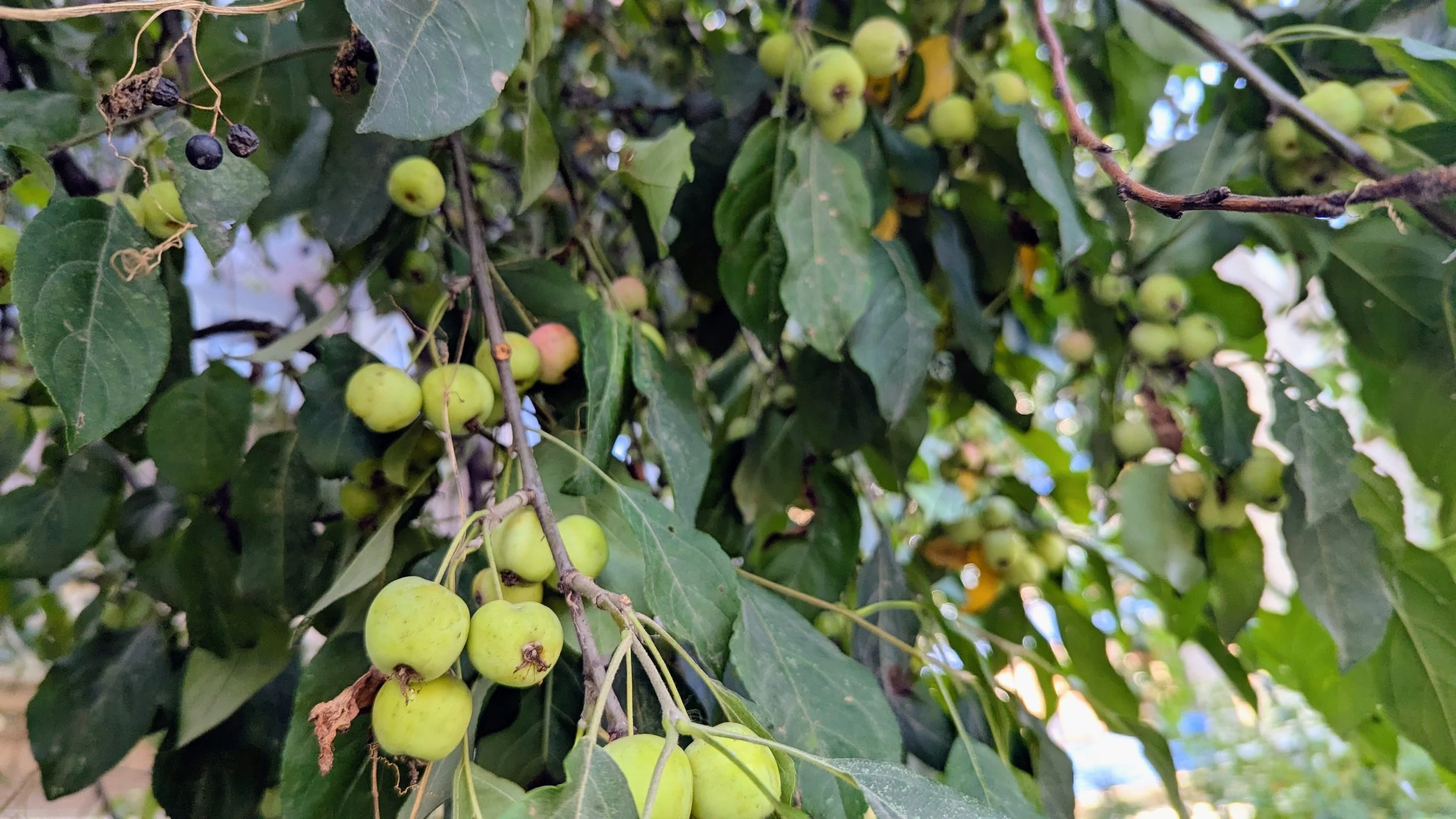
Apple Tree
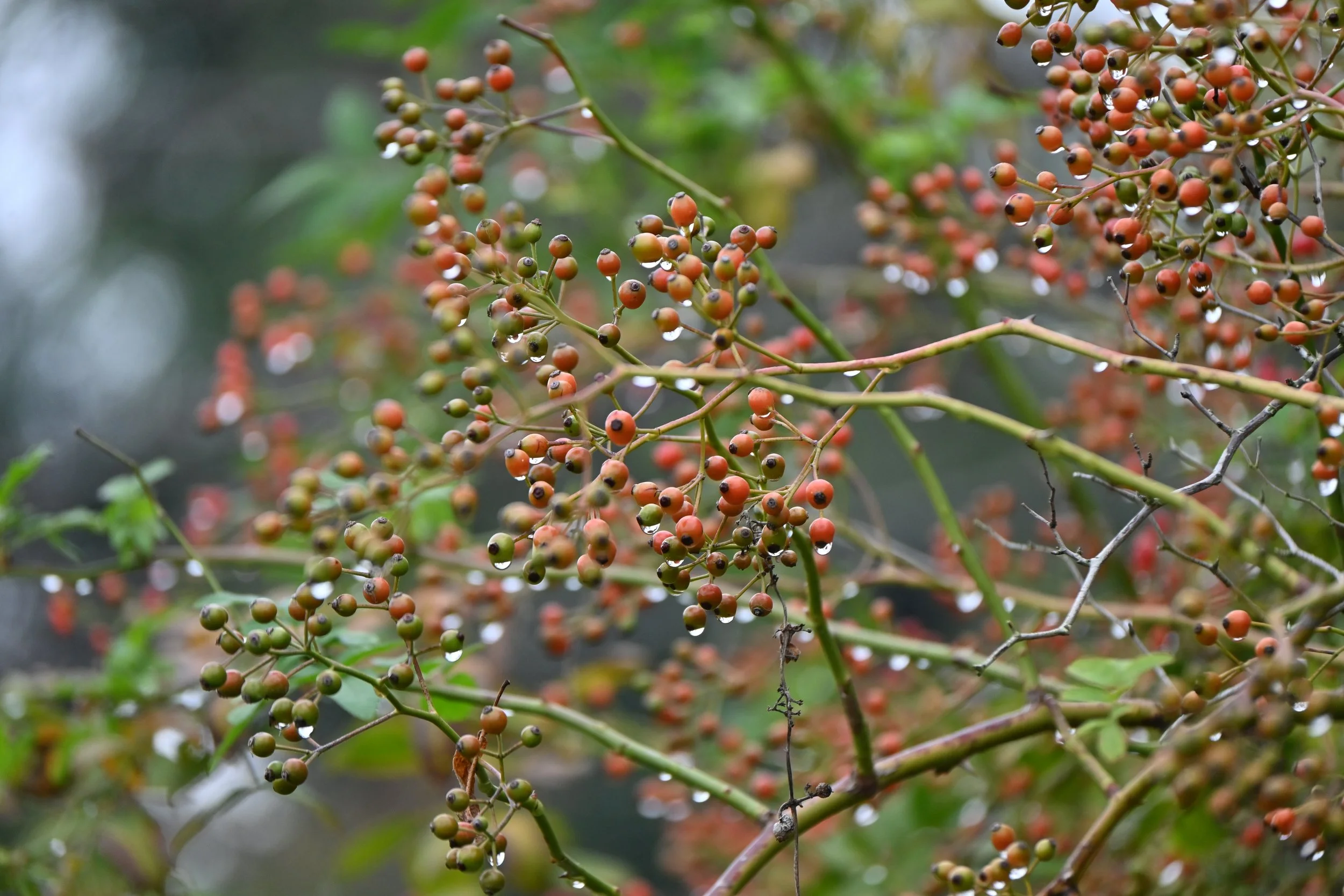
Multiflora Rose
The Apple Tree and the Rose That Climbed It
On our walk this week we found a puzzle: an old apple tree with a tangle of thorny rose canes growing right up through its branches. Some rose stems were hanging from limbs way over our heads! How did a rose bush get up there, and is it good or bad for the tree? Let's meet the two plants and find out.
Meet the Apple Tree
You know apples from your lunchbox, but did you know apple trees aren't originally from Maine, or even North America? Today's apples trace their family tree back to wild apple forests in the mountains of Kazakhstan, in Central Asia. Thousands of years ago, travelers on the Silk Road (an ancient trade route between China and Europe) snacked on wild apples and tossed the cores. Seeds sprouted, new trees grew, and they mixed with other wild apples as they spread west. Fun fact: the city of Almaty in Kazakhstan gets its name from alma, the Kazakh word for apple!
European settlers brought apples to New England in the 1600s, and Maine farms once had orchards almost everywhere. Many of those farms are now forest, but the apple trees are still there. That's why we find gnarly old apple trees in the middle of the woods. Deer, bears, porcupines, and birds all love the fruit.
So apple trees are non-native, meaning they came from somewhere else. But they are not invasive. They don't take over forests or crowd out Maine's native plants, and they've become an important food for wildlife.
Meet Multiflora Rose
Multiflora rose is a shrub with clusters of small white flowers in early summer and little red fruits called rose hips in the fall. Its long, arching canes are covered in curved, hooked prickles that grab anything they touch, including your jacket (as some of us found out!).
Multiflora rose comes from Japan, Korea, and eastern China. It arrived in the United States in the 1800s, and people later planted it on purpose as a "living fence" for farm animals. That turned out to be a big mistake.
Like the apple, multiflora rose is non-native. But unlike the apple, it is invasive. Maine lists it as widespread and very invasive, and it's illegal to sell here. Here's why:
- It makes a LOT of seeds. One plant can produce up to a million seeds a year, and they can wait in the soil for up to 20 years before sprouting.
- Birds spread it everywhere. Birds eat the rose hips and drop the seeds in new places.
- It forms thickets. It grows into prickly tangles that are nearly impossible to walk through and that shade out native plants.
The Relationship: A Climber and Its Ladder
Multiflora rose doesn't have tendrils like a grapevine, but it doesn't need them. Its hooked prickles work like tiny grappling hooks. As its long canes grow, they lean on nearby trees and hook onto the branches. Bit by bit, the rose scrambles upward, using the apple tree as a ladder to climb toward the sunlight at the top of the canopy.
Here's a clever twist: birds love to perch in apple trees, and many of them have been snacking on rose hips. When they drop seeds below the branches, they're planting new roses right at the base of the tree!
For the apple tree, this is not a good deal. The rose gets a free ride to the light, and the apple gets nothing back. Over time, the rose can:
- Steal sunlight by spreading its leaves over the apple's leaves
- Add heavy weight to branches, especially when snow and ice pile onto the tangle
- Compete for water and nutrients around the tree's roots
- Smother the tree so it makes less fruit, or even dies
Ecologists call this competition, but with a sneaky trick: the rose uses its competitor as a support structure!
One more surprise: apples and roses are cousins! Both belong to the rose family, Rosaceae. Look closely at apple blossoms and wild rose flowers and you'll see they both have five petals. In this case, though, one cousin is definitely taking advantage of the other.
Think About It
- Why would climbing give a plant an advantage in a forest?
- If you owned a field with old apple trees, what would you do about the multiflora rose?
- Can you think of other non-native species that are not invasive?
Learn More
- Multiflora Rose: Maine Natural Areas Program
- Multiflora Rose on Go Botany (Native Plant Trust)
- Multiflora Rose Fact Sheet: Vermont Invasives
- Dropped Seeds from Kazakhstan Got Us Modern Apples (Futurity)
- How the Apple Became an Iconic Fruit (Earth.com)
See you on the trail next Monday! 🍎🌹